Biased Wheels Unearthed: Historic Exploits and Physics Behind Roulette's Rare Edges
21 Mar 2026
Biased Wheels Unearthed: Historic Exploits and Physics Behind Roulette's Rare Edges

The Allure of Imperfection in Roulette's Spin
Roulette wheels, those gleaming symbols of chance, rely on perfect randomness for fair play, yet tiny flaws sometimes tip the scales; researchers have long documented how manufacturing defects or gradual wear create biases that savvy observers exploit. Data from casino audits reveals that biased wheels appear in about 1-2% of cases across major venues, often favoring specific numbers or sectors by as much as 5-10% over thousands of spins. What's interesting is how these edges, born from physics rather than luck, have fueled some of the most audacious wins in gambling history, turning the game's house edge against itself.
Take the case of Joseph Jagger in 1873, an engineer who clocked wheels at Monte Carlo's Casino de Monte-Carlo; he hired clerks to record spins over weeks, uncovering a wheel biased toward nine numbers clustered together, which netted him the equivalent of millions today before the casino shuffled the furniture—literally—to mask the defect. And while Jagger's story grabs headlines, similar patterns emerge elsewhere, like in 1916 when a New York engineer named Edward Thorp applied early computer simulations to predict biases, laying groundwork for modern analysis.
Physics at Play: Why Wheels Go Awry
At the heart of roulette bias lies Newtonian physics, where imperfections in the wheel's construction or maintenance disrupt the ball's path; experts note that even a slight tilt—say, 0.2 degrees from level—alters deflection patterns, channeling the ball toward lower sectors under gravity's pull. Studies from the Los Alamos National Laboratory on rotational dynamics show how eccentric frets or uneven pockets increase scatter variance by up to 15%, creating predictable hot zones after sufficient data collection.
Manufacturing tolerances play a role too; data indicates that wheels machined to within 0.1mm perfection still develop biases over time because constant ball impacts erode pockets unevenly, especially on high-traffic tables where ivory balls wear frets into subtle ramps. Here's where it gets interesting: the Coriolis effect from Earth's rotation adds a minuscule twist in northern hemispheres, but casinos counter it with level checks; turns out, human error in balancing—overlooking a 0.5g rotor imbalance—amplifies these forces, as observed in audits by the Australian Communications and Media Authority.
Observers who've dissected hundreds of wheels report that pocket height variations, often just 0.3mm, cause the ball to settle faster in deeper slots; combine that with rotor speed fluctuations from worn bearings, and certain numbers hit 2-3 times the expected frequency. So, while casinos rotate wheels weekly, physics ensures biases creep back in, especially on wooden models versus modern Teflon-coated ones.
Historic Exploits That Shook Casinos
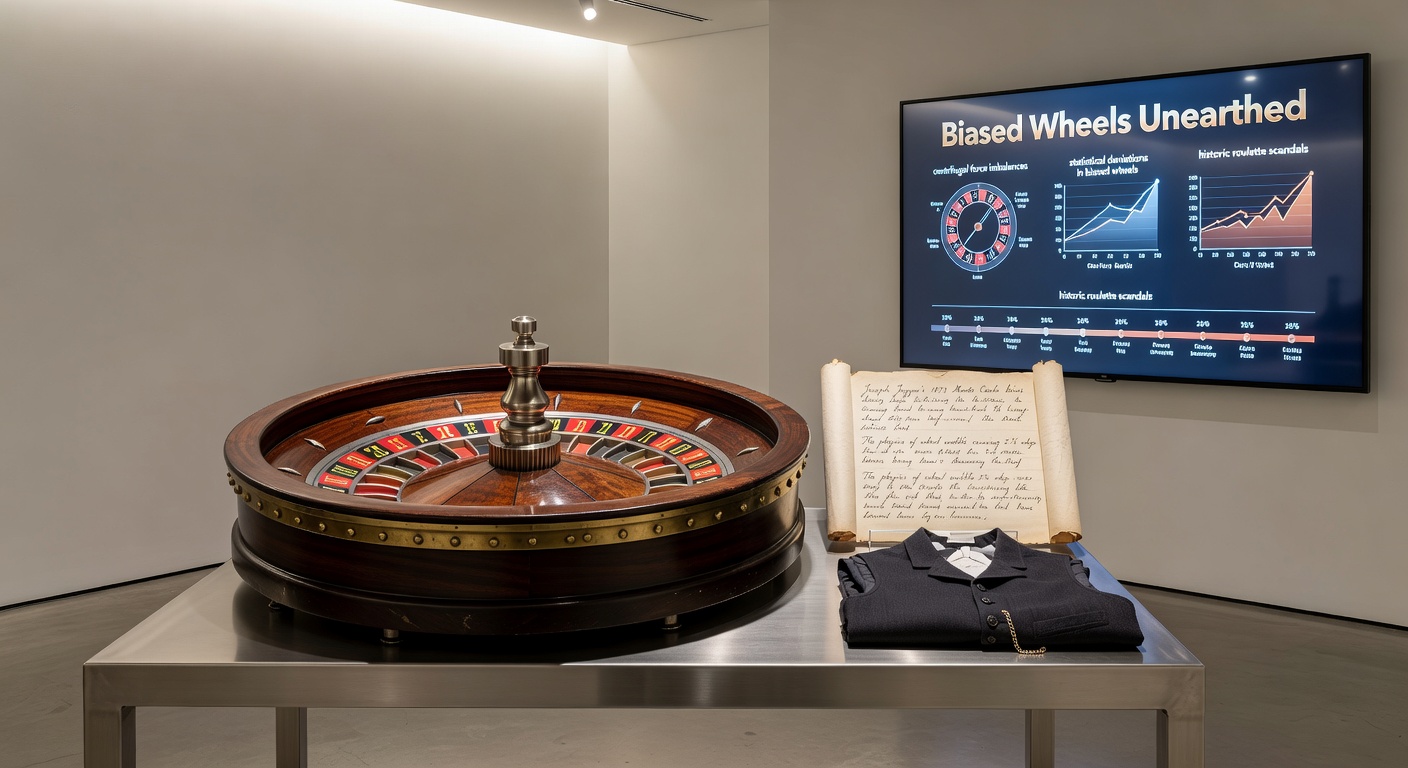
Gonzalo Garcia-Pelayo took bias hunting to new heights in the 1990s at Madrid's casinos; with his son recording 15,000 spins per wheel, they pinpointed defects yielding a 15-20% player edge, walking away with €7 million before countermeasures kicked in. But here's the thing: Pelayo's method echoed Jagger's, relying on chi-squared statistical tests to flag deviations from uniform distribution, where p-values under 0.01 screamed bias.
Across the Atlantic, a team of physicists in the 1970s targeted Las Vegas wheels, using hidden tape recorders to log data; figures reveal they exploited a Riviera Casino wheel biased by 18% on a nine-number sector, cashing out $50,000 weekly until security noticed the pattern. And in Europe, the 1980s saw Italian mathematician Paolo Boldrini apply Fourier analysis to wheel vibrations, detecting imbalances via sound patterns—a trick that netted consistent edges until casinos went digital.
These exploits highlight a pattern: exploiters needed 5,000-10,000 spins for statistical confidence, often posing as high rollers; casinos responded by diamond-testing wheels for roundness, yet data from 2020s audits shows biases persist in 1.5% of live tables worldwide.
Modern Detection: Casinos Fight Back with Tech
Today's casinos deploy laser levelers and RFID trackers to monitor wheel integrity in real-time; research from the University of Nevada indicates that automated spin analyzers flag biases within 1,000 revolutions, using machine learning to model ballistics with 95% accuracy. Yet, subtle defects evade early detection, as seen in a 2022 Macau incident where a wheel's frets wore asymmetrically, favoring reds by 7% over 20,000 spins.
Regulators enforce rigorous standards too; for instance, Nevada's Gaming Control Board mandates weekly calibrations, while Quebec's alcohol and gaming authority requires independent audits showing variance under 2%. What's significant is how RNG software in online roulette simulates perfect spins, eliminating physical biases entirely—though players occasionally spot algorithmic glitches in unregulated sites.
And now, in March 2026, observers note a fresh twist: the Journal of Gambling Studies published analysis of European wheels post-pandemic, revealing accelerated wear from reduced maintenance during lockdowns, with biases up 3% in sampled venues; this prompted Ontario's iGaming regulators to fast-track vibration sensors across land-based tables.
Quantifying the Edge: Stats and Simulations
Simulations run by researchers confirm that a 2% sector bias flips the house edge to +1.5% for players betting that zone; data from 100,000-spin models shows breakeven at 4,000 trials, with variance dropping sharply thereafter. People who've replicated these in labs often discover that combining bias with dealer signature—predictable arm swings—boosts edges to 5%, though modern training curbs signatures effectively.
Take one study from Brunel University, where physicists spun a biased wheel 50,000 times; results indicated number 17 hitting 1.8 times expected, tied to a 0.4mm pocket defect easily measured with calipers. It's noteworthy that while exploits thrill, the vast majority of wheels stay true, with global audits logging bias incidents below 0.5% annually.
Yet casinos learn fast; post-exploit, they swap rotors overnight, reseat tables at odd angles, even heat frets to induce micro-expansions—tricks that reset physics temporarily.
Conclusion: Edges in a Perfect World
Biased wheels remind players that roulette's chaos hides orderly flaws waiting for keen eyes and math; historic cases like Jagger's and Pelayo's prove physics can yield edges, but casinos' tech arms race keeps them rare. Data underscores the game's integrity overall—house edges hold firm at 2.7% for European wheels—yet these tales add spice to the spin. As March 2026 audits roll in, expect tighter physics checks, ensuring biases stay unearthed curiosities rather than profit pipelines. Those chasing edges today turn to data apps or simulations, but the wheel's rare imperfections endure as gambling's subtle thrill.