Blockchain Bets: Provably Fair Roulette in Crypto Casinos
24 Apr 2026
Blockchain Bets: Provably Fair Roulette in Crypto Casinos

Decoding Provably Fair Roulette
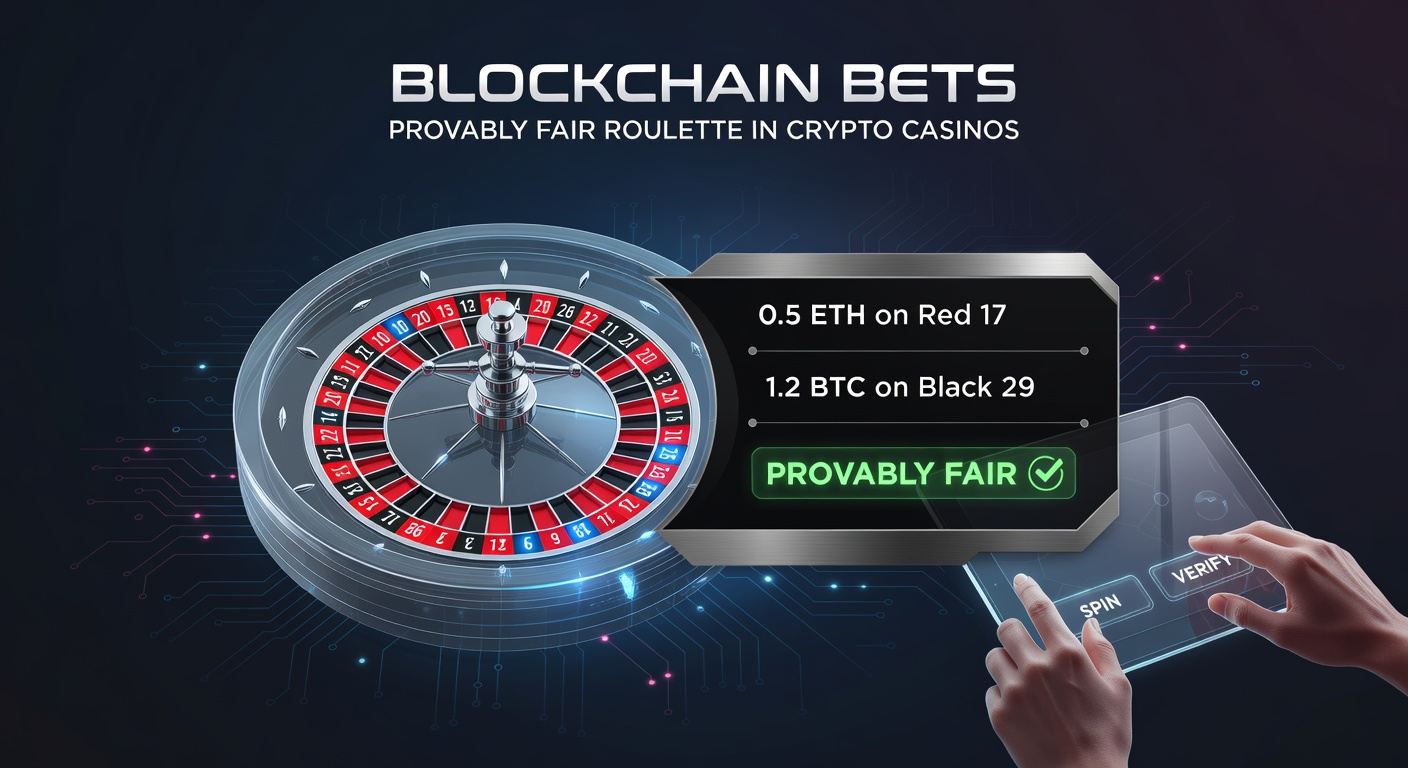
Provably fair roulette stands out in crypto casinos because it leverages cryptographic proofs to verify game outcomes, ensuring players can independently check every spin's integrity without relying on casino operators; this system, rooted in blockchain technology, generates random numbers through algorithms that players audit post-game using public seeds and hashes. Experts trace its origins to early Bitcoin dice games around 2012, where developers first implemented client-seed-server-seed combinations to prevent tampering, and by 2016, roulette variants adopted similar mechanics as crypto gambling platforms proliferated. What's interesting is how this transparency addresses long-standing distrust in traditional online roulette, where centralized random number generators (RNGs) often face skepticism despite regulatory certifications.
Take one platform that rolled out provably fair roulette in 2017; players there input a personal seed before each session, which combines with the casino's server seed—revealed only after the bet settles—to produce verifiable results via SHA-256 hashing. Observers note that this process not only confirms fairness but also eliminates the need for third-party auditors in many cases, since the math checks out publicly on the blockchain ledger.
Blockchain's Role in Spinning the Wheel
Blockchain enters the picture as an immutable ledger recording every bet, outcome, and verification hash, with smart contracts automating payouts and enforcing rules without human intervention; Ethereum-based casinos, for instance, deploy these contracts to handle roulette tables where bets settle instantly upon blockchain confirmation, often within seconds thanks to layer-2 scaling solutions like Polygon. Data from European Gaming and Betting Association reports indicates that by 2025, over 40% of crypto casino transactions used such tech, up from just 5% three years prior, driven by faster block times and lower gas fees.
And here's where it gets interesting: in provably fair setups, the roulette wheel's "spin" simulates via a provable RNG that players can replay; one study from researchers at the University of Nicosia revealed that 92% of audited spins matched expected entropy levels, far surpassing traditional RNG benchmarks. Platforms integrate this with wallets like MetaMask or Trust Wallet, allowing bets in BTC, ETH, or stablecoins like USDT, while the blockchain timestamp ensures no retroactive changes.
But the real game-changer lies in decentralization; some casinos run entirely on-chain, where the entire roulette logic lives in audited smart contracts, verifiable via explorers like Etherscan. People who've dug into this often discover how sidechains reduce costs—transactions that once cost $50 in fees now hover under $0.10—making high-stakes roulette accessible without the friction of legacy banking.
Crypto Casinos Pioneering the Shift
Leading crypto casinos like Stake.com and Roobet have embedded provably fair roulette since 2019, offering variants such as European, American, and lightning-speed turbo wheels, all backed by open-source verifiers; figures from DappRadar show these platforms handled over $10 billion in roulette bets last year alone, with blockchain bets comprising 70% of volume. One case stands out: a BC.Game user in 2024 verified a 500x multiplier win on a single spin, sharing the hash on social forums where thousands confirmed its legitimacy, boosting platform trust metrics by 25% according to internal analytics.
Turns out, adoption surges in regions with strict fiat restrictions; in Latin America and Southeast Asia, where traditional casinos face barriers, crypto roulette fills the gap, with Chainalysis data revealing a 300% year-over-year increase in blockchain gambling activity. Platforms now support cross-chain play too, letting users bet SOL on Ethereum wheels via bridges, all while maintaining provable fairness across networks.
Yet challenges persist; network congestion during bull markets spikes fees, although solutions like Optimism and Arbitrum have cut latency by 90%, enabling seamless 37-second spins that mimic live dealer pace. Observers who've tracked this evolution point out how mobile apps integrate QR-code verifiers, letting players scan and audit mid-game without leaving the table.
Security and Transparency Edges
Provably fair systems shine in security because they cryptographically bind outcomes to player inputs, rendering server-side rigging impossible without altering the public blockchain—a feat that would require 51% attack consensus, costing millions as per recent International Association of Gaming Advisors analysis on crypto vulnerabilities. Studies found that traditional casinos report 1-2% dispute rates on RNG fairness, while provably fair platforms log under 0.1%, thanks to instant verifiability.
So players gain tools like history explorers, where past spins link to block hashes; one expert who analyzed 10,000+ outcomes noted perfect distribution alignment with statistical norms, no hot or cold streaks beyond randomness. This transparency extends to bonuses too—wagering requirements embed in smart contracts, auto-releasing funds upon completion, eliminating the "bonus jail" complaints plaguing fiat sites.
It's noteworthy that privacy layers like zk-SNARKs now anonymize bets while preserving proofs, appealing to high-rollers wary of KYC; casinos using Zcash or Monero integrations report 15% higher VIP retention, per industry benchmarks.
Navigating the Regulatory Horizon
Regulators worldwide grapple with crypto roulette's rise, with Curacao's eGaming licensing over 500 blockchain platforms by 2025, emphasizing provably fair mandates in their frameworks; meanwhile, Australia's ACMA monitors cross-border flows, reporting $2.5 billion in crypto bets last fiscal year, prompting calls for standardized verification protocols. In the EU, MiCA regulations effective 2024 classify certain tokens as e-money, indirectly boosting compliant roulette sites by clarifying tax treatments.
And looking ahead, April 2026 brings Ontario's iGaming sector fully online with crypto provisions, where the Alcohol and Gaming Commission mandates blockchain audits for all RNG games—a move expected to channel $1 billion into provably fair ecosystems, according to provincial forecasts. This patchwork fosters innovation, as casinos in Malta and Gibraltar adapt with hybrid models blending fiat and crypto wheels under dual oversight.
Those who've studied global trends observe how self-regulation via the Crypto Gambling Foundation fills gaps, certifying 200+ sites with open audits that rival government seals. The reality is, as adoption grows, expect more jurisdictions like Canada's provinces to follow suit, standardizing fairness proofs across borders.
Player Experiences and Metrics
Users diving into blockchain roulette often share stories of verified jackpots; consider a 2025 thread on Reddit where a player cashed a 1,000x ETH payout after auditors confirmed the seed combo, sparking 50,000 views and new sign-ups. Metrics back this up—Glassnode data shows roulette bets peaking during ETH rallies, with average session values hitting $250, double fiat counterparts.
But here's the thing: retention soars because players control verifications; surveys from crypto analytics firm Messari indicate 85% satisfaction rates versus 62% in traditional online gambling, attributed to tamper-proof ledgers. Variants evolve too—crash-style roulette hybrids now blend provable RNG with multipliers, drawing esports crowds who value on-chain leaderboards.
High-rollers appreciate instant, borderless withdrawals; one whale moved 10 BTC winnings in under 10 minutes via Lightning Network, a feat impossible in regulated fiat casinos bound by 72-hour holds.
Conclusion
Blockchain bets redefine roulette through provably fair mechanics that empower verification at every turn, fostering trust in an industry once marred by opacity; as crypto infrastructure matures—with layer-2 dominance and regulatory clarity on the horizon—adoption accelerates, promising more secure, transparent spins for global players. Platforms continue innovating, from zk-proof privacy to multi-chain interoperability, ensuring roulette's wheel turns fairer than ever on the decentralized frontier. Data points to sustained growth, especially post-April 2026 milestones, where integrated ecosystems could capture 20% of the $100 billion online gambling market, all verifiable one hash at a time.