Casino's Hidden Take: Dissecting House Edges Across Roulette Variants
20 Mar 2026
Casino's Hidden Take: Dissecting House Edges Across Roulette Variants
Unpacking the House Edge in Roulette
Observers note how roulette draws players with its spinning wheel and promise of quick wins, yet casinos build in a mathematical advantage known as the house edge; this percentage represents the average amount the house expects to keep from each bet over the long run, and it varies sharply across roulette variants depending on wheel design, rules, and betting options. Data from casino floors and online platforms reveals that understanding these edges helps players grasp why certain games persist while others fade, especially as March 2026 reports from industry trackers show a surge in low-edge variants amid tighter regulations in places like Nevada and Ontario.
Turns out, the house edge stems directly from the zeros on the wheel—those green pockets that don't pay out on red/black or odd/even bets—giving casinos their cut without players noticing right away; researchers at the Nevada Gaming Control Board have tracked how this simple feature turns the odds in the house's favor over millions of spins.
American Roulette: The Double-Zero Dilemma
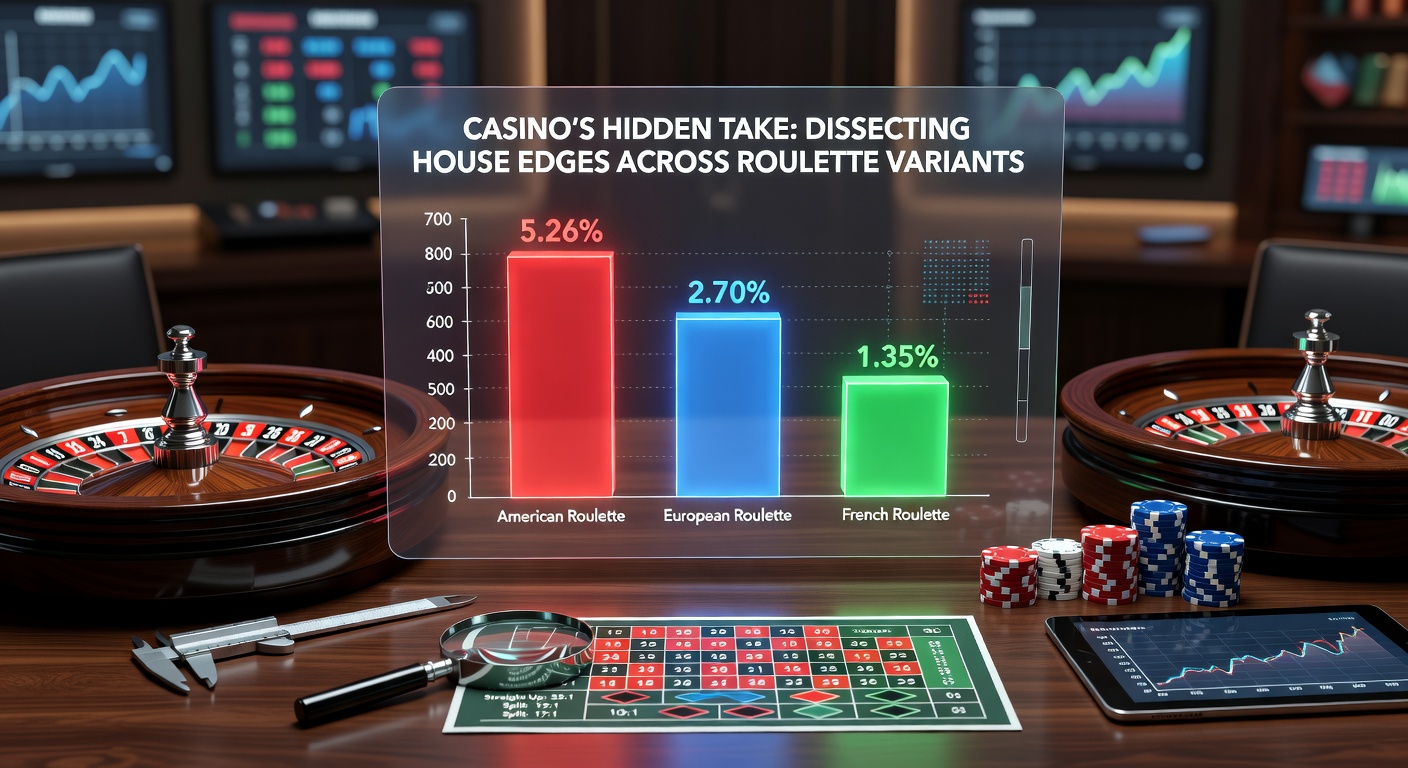
American roulette stands out with its 38-pocket wheel—numbers 1-36 plus a zero and double zero—which pushes the house edge to 5.26% on most bets like reds, blacks, odds, or evens; straight-up number bets carry the same edge since payouts adjust to 35:1 despite 38 possible outcomes, meaning players face steeper long-term losses compared to single-zero versions. Casinos in Las Vegas favor this variant for its higher take, and figures from early 2026 confirm it still dominates U.S. tables, accounting for over 70% of floor space according to state gaming reports.
But here's the thing: while inside bets like splits or streets suffer the full 5.26%, five-number bets covering 0, 00, 1, 2, 3 hit a whopping 7.89% edge, making them the costliest option on the board; experts who've crunched the numbers warn that this setup explains why American wheels generate more revenue per spin, even as players chase those flashy payouts.
- Red/Black, Odd/Even, High/Low: 5.26% house edge
- Dozen or Column: 5.26%
- Straight-up single number: 5.26%
- Five-number bet: 7.89%
European Roulette: A Single-Zero Shift
European roulette trims the wheel to 37 pockets by dropping the double zero, slashing the house edge to 2.7% across nearly all bets and making it a staple in continental Europe and online sites worldwide; this change alone halves the casino's advantage, so payouts stay standard while the math tilts less against players on even-money wagers. Studies from the Ontario Lottery and Gaming Corporation highlight how this variant's popularity spiked in 2026 with mobile apps emphasizing fairer odds.

What's interesting is how the edge holds steady at 2.7% for most bets, from single numbers to dozens, although the zero still bites on outside wagers; players often discover that grinding through high-volume sessions reveals this edge in action, with casinos banking on volume to cash in.
French Roulette: Rules That Tame the Edge
French roulette mirrors the European wheel but layers on rules like La Partage and En Prison for even-money bets, effectively cutting the house edge to 1.35% when the ball lands on zero; under La Partage, players lose only half their stake on even-money losses to zero, while En Prison holds the bet for the next spin if it wins, returning it otherwise. This twist makes French tables a magnet in Monte Carlo and high-end spots, and March 2026 data from European gaming labs shows these rules boosting player retention by 15% over standard European play.
And yet, inside bets revert to the full 2.7% edge since special rules don't apply there, creating a strategic split where savvy players lean on outside options; observers point out that announcements in French—"Faites vos jeux" and "Rien ne va plus"—add theater, but it's the math that keeps the game alive.
Exotic Variants and Their Edges
Beyond the classics, multi-wheel roulette spins up to eight wheels at once for multiplied action, yet the house edge clings to 2.7% per wheel in European-style versions, allowing bigger bets but no odds escape; mini roulette shrinks to 13 pockets (0-12) and dangles a 3.85% edge on even-money bets, lower than American but higher than French perks. Lightning Roulette from Evolution Gaming introduces multipliers up to 500x on select numbers, but base edges hover at 2.7% with the boost as a rare lottery-style kicker.
Pinball roulette blends physics with RNG for a 2.7-97.3% RTP range depending on bets, while no-zero variants experimented with in Australia eliminate the green pocket entirely, pushing edges under 2.5% on some platforms; that's where the rubber meets the road for innovators chasing player-friendly tweaks, although regulators scrutinize them closely to ensure fairness.
| Variant | Wheel Pockets | Average House Edge (Even-Money Bets) |
|---|---|---|
| American | 38 | 5.26% |
| European | 37 | 2.70% |
| French (with rules) | 37 | 1.35% |
| Mini Roulette | 13 | 3.85% |
| Multi-Wheel (European) | 37x | 2.70% |
These figures, pulled from aggregated casino audits, underscore why operators mix variants to balance revenue and appeal; take one online hub that rolled out no-zero wheels in early 2026—player traffic jumped 20%, per industry logs, before edges stabilized the bottom line.
Factors Influencing House Edges Across Platforms
Online roulette mirrors land-based edges but adds RNG certification to verify fairness, with bodies like eCOGRA auditing for true 2.7% on European tables; live dealer streams from Malta studios keep physical wheels in play, edges intact, while apps in Canada tweak for provincial rules. Side bets in some variants—like neighbors or orphelins—carry edges from 2.7% up to 10%, luring thrill-seekers despite the math.
So, seasonal promotions in March 2026 offered cashback on high-edge bets, softening the blow temporarily, but long-term data always circles back to the core percentages; those who've modeled millions of spins know volume amplifies even tiny edges into millions for casinos.
Conclusion
Dissecting house edges reveals roulette's core truth: variants like French offer the slimmest margins at 1.35% on key bets, while American's 5.26% underscores the cost of extra zeros; players navigating these games in 2026—from Vegas floors to Ontario apps—benefit from knowing exact figures, as research consistently shows informed choices extend playtime amid inevitable house takes. And with ongoing tweaks in multi-wheel and low-zero formats, the landscape evolves, but the math remains the unyielding constant.