11 Aug 2026
Charting the Diffusion of Roulette Variants Across Continents During the 1800s
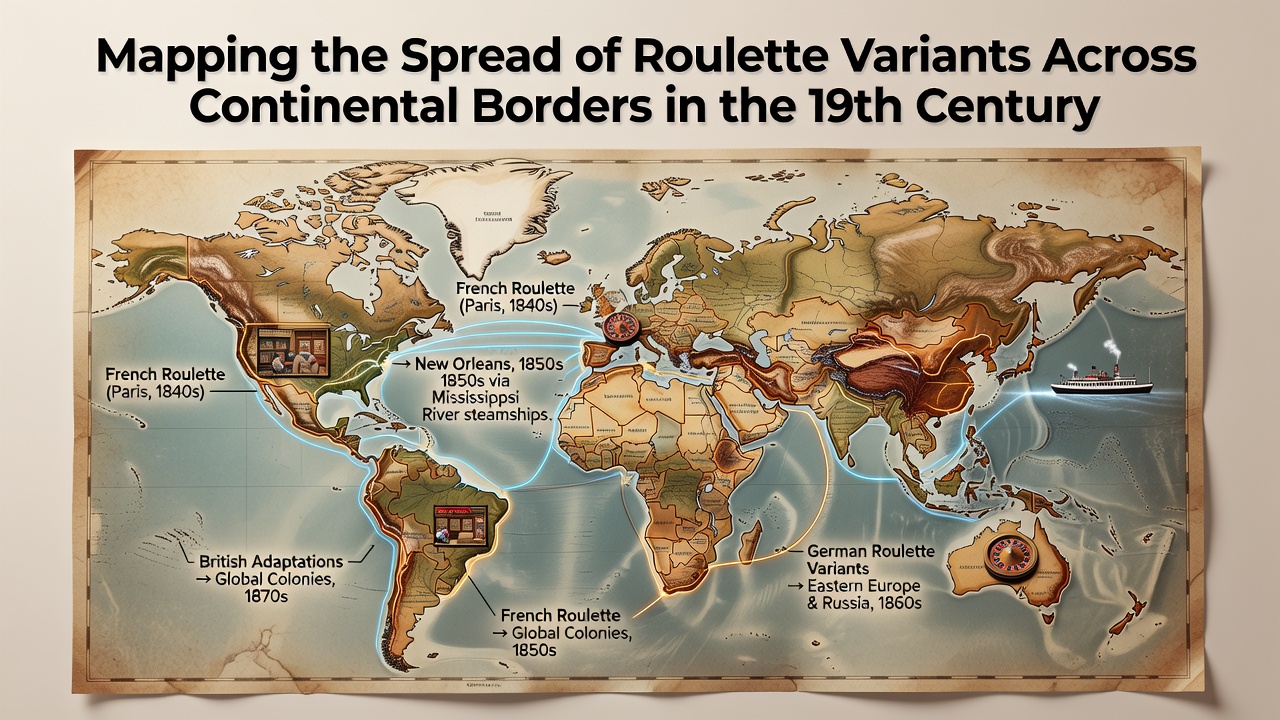
Historical records trace roulette origins to late eighteenth-century France, where inventors combined elements of existing wheel games with a rotating disk and numbered pockets; by the early 1800s this format had already produced distinct variants that began moving outward. French roulette featured a single zero, while emerging German adaptations sometimes altered payout structures and wheel layouts to suit local casino regulations. Archival documents from Parisian gaming houses show that these differences became codified as operators carried equipment and rules across borders, creating measurable divergences in house edges and betting options that travelers documented in journals and ledgers.
European Expansion and Local Adaptations
During the first half of the nineteenth century roulette tables appeared in Baden-Baden, Wiesbaden, and other German spa towns where operators introduced minor mechanical adjustments such as altered pocket depths that affected ball behavior. These modifications, recorded in contemporary casino ledgers, spread southward into Italy and Austria as seasonal gamblers carried both equipment and rule sets between establishments. Observers note that French single-zero wheels remained dominant in western Europe, whereas eastern venues sometimes incorporated double-zero pockets after contact with American expatriates who arrived via maritime routes. Data from period newspapers indicate that by 1850 at least twelve documented variants circulated within a 500-kilometer radius of the Rhine, each distinguished by zero count, maximum bet limits, or payout ratios.
Further east, Russian aristocrats imported French-style tables yet commissioned local craftsmen to produce wheels with Cyrillic numbering; surviving examples in museum collections reveal these hybrid forms retained the single-zero mechanic while displaying regional aesthetic preferences. Trade routes connecting port cities such as Odessa and Marseille facilitated the movement of both physical wheels and written rule sheets, allowing operators to replicate successful configurations without direct travel. Researchers have mapped these patterns through surviving customs manifests that list gaming apparatus among imported luxury goods.
Transatlantic Movement and the Emergence of American Forms
By the 1820s roulette reached New Orleans through French colonial networks, where operators introduced the double-zero pocket that doubled the house advantage compared with European models. Steamship passenger lists from the period record gamblers transporting wheels between Le Havre and Louisiana ports, and court records from the 1830s document disputes over which zero configuration applied in specific saloons. This American variant subsequently traveled northward along the Mississippi River and later reached California during the Gold Rush, establishing a distinct continental branch that differed measurably from its European predecessors in both wheel composition and betting procedures.
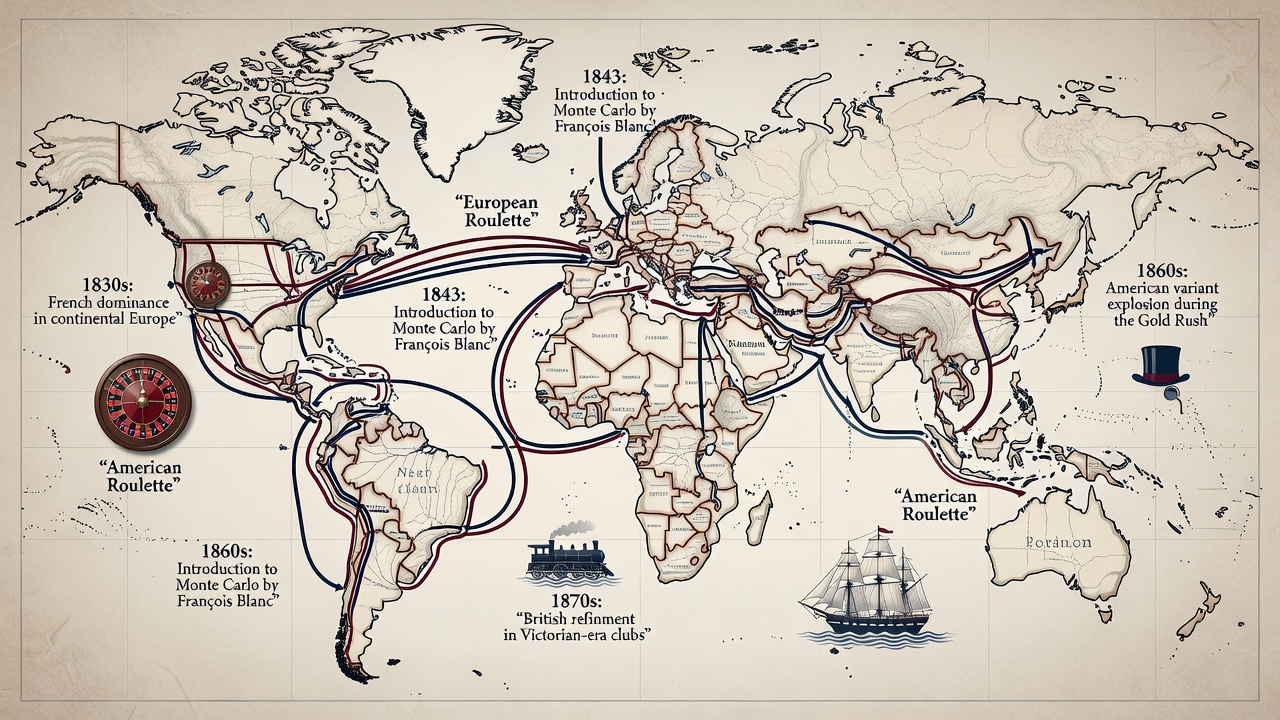
South American ports received both variants through transatlantic shipping lines operating out of Lisbon and Liverpool; Brazilian gaming houses adopted the double-zero wheel after receiving shipments from New Orleans suppliers in the 1870s. Customs ledgers preserved in Rio de Janeiro archives list roulette equipment alongside other casino furnishings, confirming the physical transfer of components rather than mere rule descriptions. Meanwhile, Australian colonies documented the arrival of French-style single-zero tables via British naval vessels whose officers maintained recreational gaming salons during long voyages.
Documentation Methods and Scholarly Mapping
Historians rely on cross-referenced sources including casino account books, traveler diaries, and patent applications filed in multiple countries to reconstruct these diffusion routes. One study published by the Library of Congress compiles shipping manifests that list roulette wheels as cargo between 1815 and 1890, revealing seasonal peaks aligned with European summer resort schedules. Another examination conducted by the European Association for the Study of Gambling analyzes rule pamphlets printed in five languages, demonstrating how terminology for the zero pocket evolved differently across linguistic boundaries while the underlying mechanics remained consistent.
By the closing decades of the century, steamship schedules and expanding rail networks accelerated the exchange of variant features, allowing operators in one continent to adopt successful innovations from another within months rather than years. Museum inventories from Philadelphia and Paris list identical wheel components manufactured in the same German workshops yet configured differently according to destination market requirements. These material traces, combined with statistical data from surviving financial records, permit researchers to chart the precise tempo and direction of variant migration across continental borders throughout the nineteenth century.
Conclusion
Primary sources demonstrate that roulette variants moved through established trade corridors, colonial networks, and leisure circuits, resulting in measurable regional differences by the end of the 1800s. Continued examination of customs records and institutional archives continues to refine the chronology of these movements, providing a clearer picture of how a single game produced multiple standardized forms across separate continents.