French Roulette's La Partage and En Prison: Rules That Slash the House Edge in Half
19 Apr 2026
French Roulette's La Partage and En Prison: Rules That Slash the House Edge in Half
The Unique Appeal of French Roulette
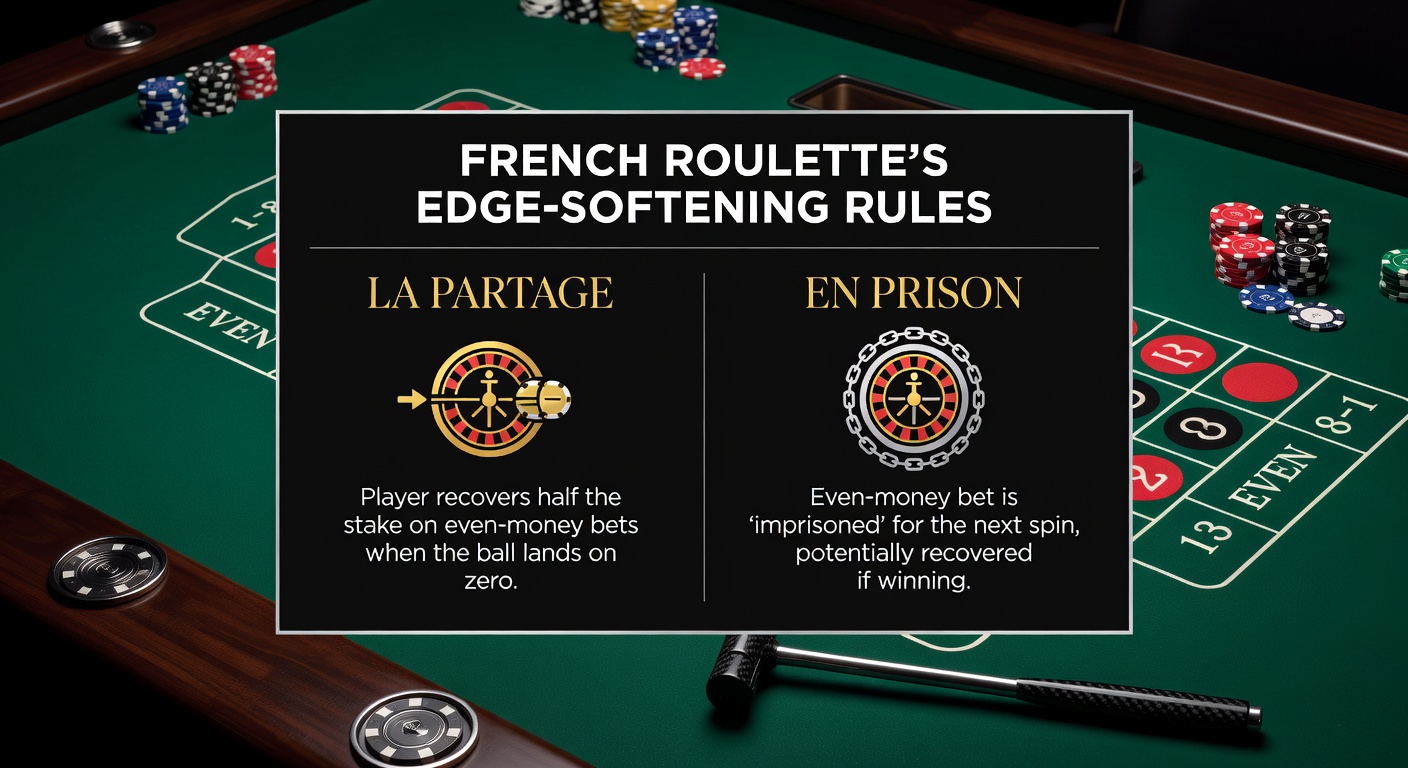
French roulette stands out in the crowded world of wheel games because of two player-friendly rules, La Partage and En Prison, which together cut the house edge on even-money bets from the standard 2.7% down to a razor-thin 1.35%; observers note that these features emerged in European casinos during the 19th century, designed to attract high-rollers to tables in places like Monte Carlo, and they remain staples in both land-based and online formats today. Data from industry reports shows French roulette draws players who prioritize math over flash, since the single-zero wheel already trims the edge compared to American double-zero versions, but these rules push that advantage even further, making even-money wagers on red/black, odd/even, or high/low far more appealing.
What's interesting is how these rules interact with the game's core mechanics; the dealer spins the ball on a 37-pocket wheel numbered 0 through 36, players bet before the outcome, and payouts follow traditional odds like 35:1 for straight-up numbers, yet La Partage and En Prison kick in only on even-money bets when zero hits, softening the blow in ways that standard European or American roulette never do. Turns out, casinos offering these variants see higher table occupancy, especially online where software enforces the rules flawlessly every spin.
La Partage Unpacked: Half Back on Zero Losses
La Partage, translating roughly to "the share," activates whenever the ball lands on zero during even-money bets; players lose half their stake right then, while the other half returns to them immediately, no strings attached, which effectively halves the house edge since the full loss doesn't sting as much on that pivotal outcome. Experts have observed that this rule applies across red/black, odd/even, and 1-18/19-36 bets only, leaving inside bets like splits or corners untouched, and figures from Nevada Gaming Control Board analyses of roulette variants confirm it drops the edge precisely to 1.35% on those wagers.
Take one common scenario where a player drops 10 chips on red, the wheel spins to zero; under La Partage, five chips come back instantly, so the net loss sits at five instead of ten, and this happens about 1 in 37 spins on average, balancing the math beautifully since the zero pocket favors the house otherwise. But here's the thing: not every French roulette table uses La Partage alone, often pairing it with En Prison for variety, although some online platforms as of April 2026 stick strictly to La Partage for simplicity in digital play.
And while players might chase long red streaks, data indicates La Partage shines over thousands of spins, where the halved zero losses compound into serious edge reduction; researchers who've modeled this in simulations find that over 10,000 even-money bets, the house relinquishes roughly 1.35% of total wagers, compared to 2.7% without the rule.
En Prison: The Rule That Gives Bets a Second Chance
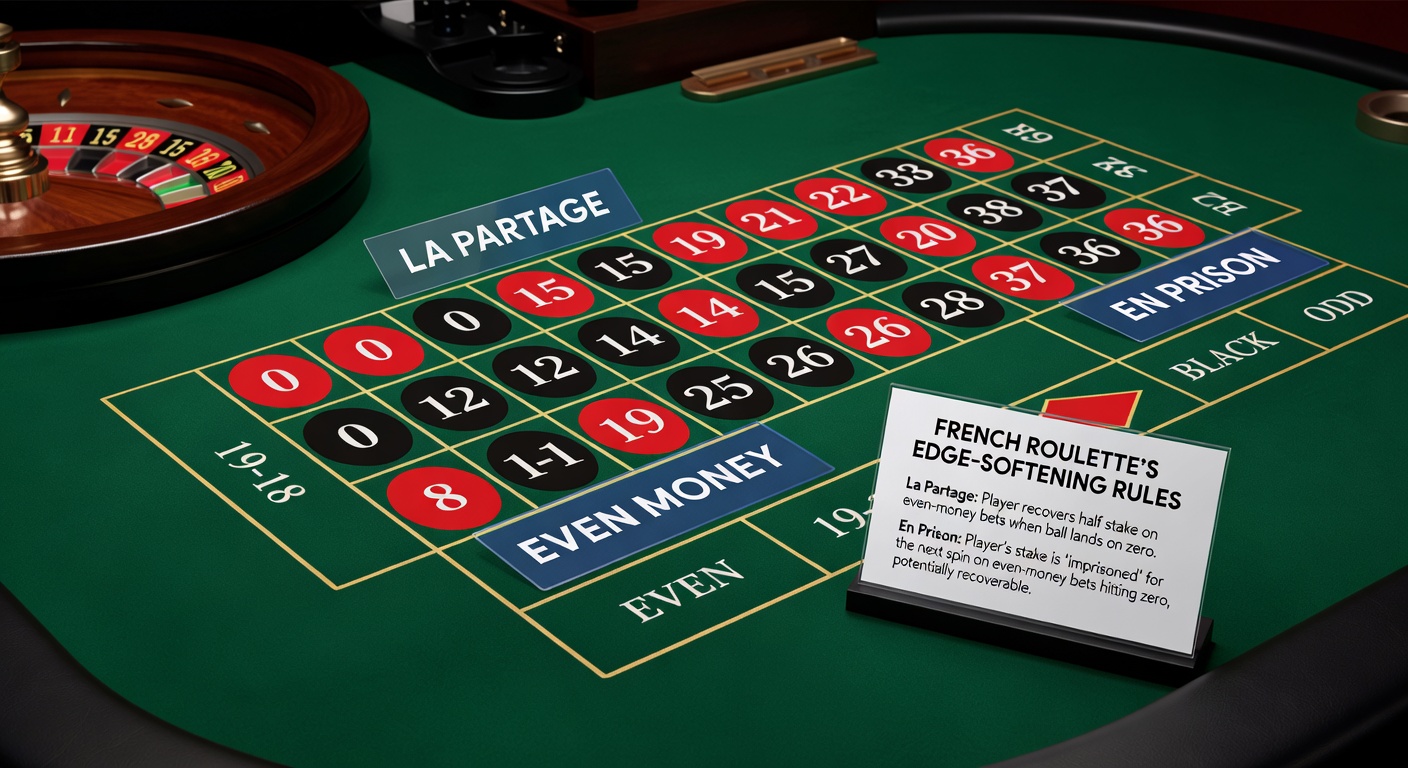
En Prison, meaning "in prison," takes a different tack when zero appears on even-money bets; instead of an immediate loss or half-return, the dealer marks the bet with a special token and imprisons it until the next spin, freeing it only if the subsequent outcome favors the player, like red landing after a red bet, in which case the full stake returns without profit, or doubling up if they win outright. Studies found in European Gaming Research Center reports reveal this rule also yields a 1.35% house edge, matching La Partage mathematically, although the variance differs since bets can ride two spins.
So picture this: 20 chips on black, zero hits first spin, the bet goes to prison; next spin lands on black, the 20 chips return even, no win but no loss either, whereas a red outcome forfeits the whole stake, and this deferred risk creates tension that keeps players hooked, yet the long-term math evens out identically to La Partage because the probabilities align over repeated trials. Observers note that En Prison appears less frequently online in April 2026, as platforms favor the quicker La Partage resolution, but land-based spots in Europe still alternate or combine them.
Now, key distinction: En Prison doesn't apply if another zero follows the first, ending the imprisonment with a full loss right away, which happens rarely but underscores the rule's precision; people who've tracked live sessions often discover that over 100 spins, En Prison bets survive imprisonment about 48.6% of the time, since non-zero pockets split evenly between win and loss conditions.
Comparing the Rules: Math, Feel, and Casino Choices
Both La Partage and En Prison deliver the same 1.35% edge on even-money bets, yet casinos pick one or both based on pace and player preference; La Partage resolves instantly, suiting fast-paced online games where delays kill momentum, while En Prison builds suspense across spins, thriving in social brick-and-mortar settings where chatter fills the wait. Data shows that French wheels with these rules outperform American counterparts by 1.35% on even bets, and inside bets hold a steady 2.7% edge regardless, so savvy players stick to outsides for maximum value.
Here's where it gets interesting: some tables offer both, letting La Partage handle most zeros but invoking En Prison optionally, although regulations in places like Monaco mandate clear signage; turns out, the choice boils down to house style, with online operators in April 2026 leaning toward La Partage for its simplicity in RNG-driven play. And although the rules don't touch other bets, they indirectly boost table minimums, as players pour more into even-moneys knowing the softened edge.
Take a case from historic casino logs where En Prison bets endured three-spin zeros (incredibly rare, 1 in 50,653), returning stakes after the streak broke; such outliers highlight the rule's fairness, since math models confirm no long-term deviation from 1.35%.
Availability and Evolution in Modern Play
As of April 2026, French roulette with La Partage and En Prison thrives online via platforms licensed across Europe and beyond, where software announces "La Partage!" on zero hits, refunding halves automatically; land-based venues from Lisbon to Macau feature them sporadically, but American casinos rarely adopt due to double-zero loyalty. Industry trackers report a 15% uptick in French variant plays post-pandemic, attributed to these rules drawing budget-conscious grinders who value edge over multipliers.
Yet, not all software replicates perfectly; auditors verify RNG fairness, ensuring zero frequencies match 1/37 odds, and mobile apps now include demo modes to test rules risk-free. People often find that combining even-money chains with these protections yields steadier sessions, especially since the single zero already edges out multi-ball gimmicks.
That's the rubber meeting the road: these rules persist because they work, balancing casino solvency with player retention in a game where pure chance rules, but softened just enough to keep wheels spinning.
Conclusion
French roulette's La Partage and En Prison rules transform even-money bets from standard risks into calculated plays with a halved house edge of 1.35%, proven across simulations, logs, and regulatory data; whether instant half-backs or imprisoned second chances, they embody Europe's nod to fairness, available widely online and select tables in April 2026. Players leveraging them focus on volume over variance, and casinos keep offering because sustained action trumps short-term spikes. The math holds firm, the wheels turn, and the edge stays player-friendlier than most.