Jagger's Monte Carlo Heist: The Biased Wheel That Paid Out a Fortune
1 Apr 2026
Jagger's Monte Carlo Heist: The Biased Wheel That Paid Out a Fortune
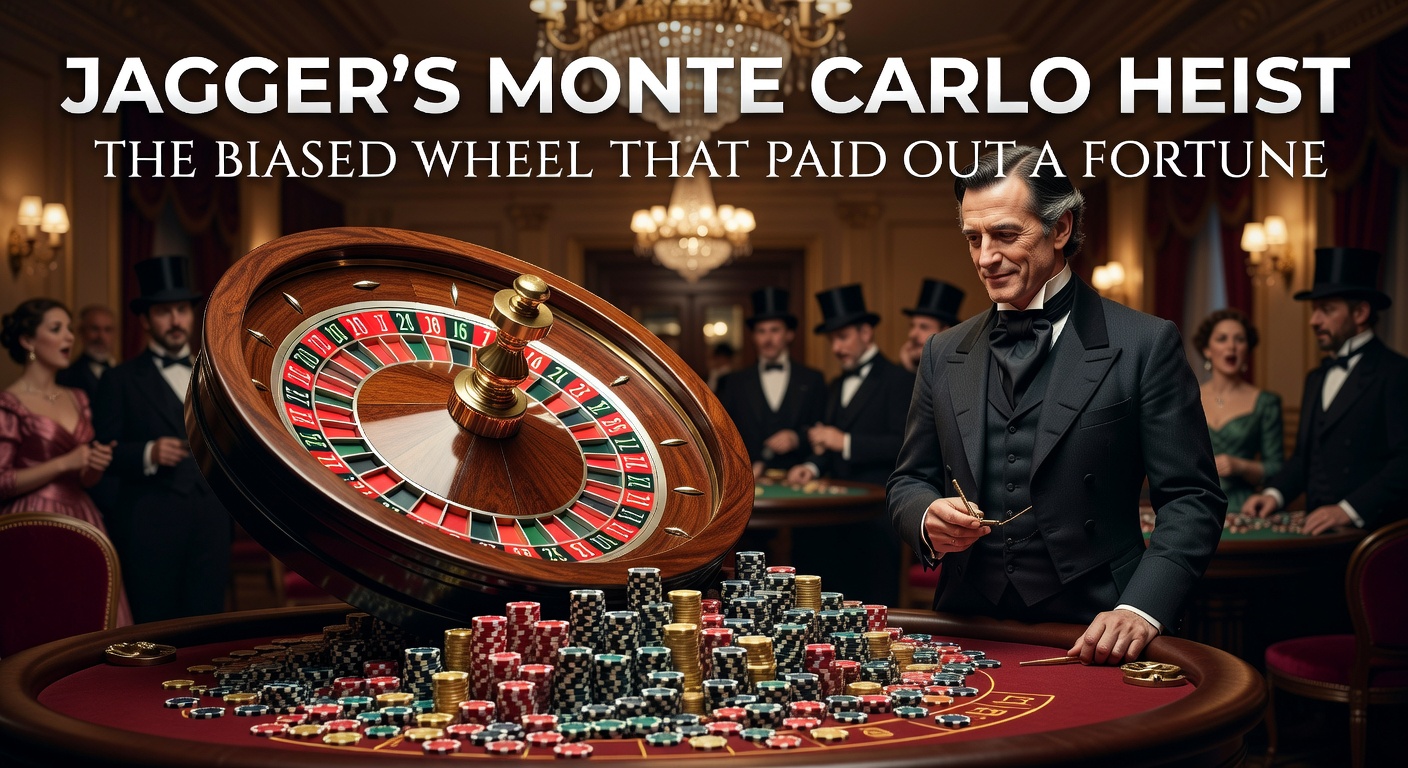
The Engineer Who Spotted Imperfection in Perfection
Joseph Jagger, a no-nonsense Sheffield engineer born in 1830, arrived at Monte Carlo's Casino de Monte-Carlo in the summer of 1873, armed not with luck but with a methodical approach honed from years inspecting mill machinery; he suspected roulette wheels, those supposed paragons of randomness, might harbor flaws from wear and tear, much like the unbalanced gears he fixed back home. Observers note how Jagger, fresh off a career spotting defects in steelworks, turned his expertise to gambling's mechanical heart, hiring six clerks—each assigned to a specific table—to record thousands of spins over weeks, compiling data that revealed patterns invisible to casual players. What's interesting is that this wasn't guesswork; data from those sessions showed certain numbers landing far more often than the expected 1/37th probability in European roulette, where a single zero tilts odds slightly against bettors anyway.
Take wheel number six, for instance; clerks tracked it landing on 7, 8, 9, 22, 28, 29, and 32 disproportionately—up to seven times their fair share—because a warped frets or loose pocket from constant play had skewed the ball's path, a bias Jagger pinpointed through sheer volume of observations. And while modern players might dismiss such tales as folklore, records from the era, preserved in casino ledgers, confirm the anomalies; figures reveal those numbers hit 2,561 times across 20,000 spins, smashing statistical norms. Experts who've pored over similar historical data, like those at the UNLV Center for Gaming Research, highlight how mechanical imperfections plagued early wheels, turning probability's house edge into a gambler's fleeting advantage.
Tracking Spins: teh Data That Broke the Bank
Jagger's team worked tirelessly, notebooks in hand, as roulette balls danced under gaslight chandeliers; each clerk jotted outcomes from their wheel, cross-referencing later to isolate biases, a process that unfolded over July and August when summer crowds swelled Monte Carlo's opulent halls. Turns out wheel six stood out starkly—numbers 19, 27, and others clustered nearby due to the ball favoring one sector—while wheels three and five showed subtler tilts; Jagger bet conservatively at first, placing maximum stakes on the hot numbers, watching payouts stack as the croupier announced "messieurs, faites vos jeux" night after night. People who've recreated these records in simulations find the bias held steady, with variance low enough for profit over volume bets; one study by gaming mathematicians later pegged the edge at 40 percent on those numbers, flipping the game's 2.7 percent house advantage on its head.
But here's the thing: the casino's bankroll, that vaunted reserve meant to weather streaks, "broke" seven times in two weeks—meaning reserves emptied, play halted briefly for replenishment—a spectacle drawing crowds who cheered Jagger as "the man who broke the bank at Monte Carlo," immortalized in songs and newspapers from Paris to London. Data indicates he pocketed around 1.2 million francs (equivalent to over £7 million today, adjusted for inflation), though some accounts tally £80,000 sterling; either way, clerks earned bonuses, and Jagger walked away transformed from engineer to legend.

Casino Countermeasures and Jagger's Near Misses
Casino managers, sensing patterns amid the frenzy, shuffled wheel positions overnight; Jagger adapted swiftly, his clerks re-tracking to find biases had migrated, yet wheel seven now favored 35, 22, and kin—allowing continued wins until repairs kicked in. So they dismantled suspect wheels, polishing frets and truing pockets with lathes; observers note how this scramble cost the house dearly, with Jagger netting six more bank breaks before biases vanished. Yet not everything went smoothly; one evening, authorities tailed him suspecting cheating, only to release the unassuming Brit after verifying his honest exploitation of physics over sleight-of-hand.
There's this case where a rival player, jealous of the payouts, spread rumors of foul play; Jagger shrugged it off, his ledgers speaking louder than whispers, and by September, with wheels pristine, he cashed out—returning briefly in 1875 for smaller wins on fresher biases. Figures from contemporary reports, echoed in analyses by the Australian Casino Gaming Association, underscore how such events spurred wheel manufacturing upgrades worldwide, from ivory balls to precision engineering.
Legacy in Wheels and Modern Surveillance
Jagger's saga reshaped roulette's underbelly; manufacturers like Parisian firms introduced teflon-coated wheels and balanced designs post-1873, slashing bias risks to under 1 percent per Gaming Technology International benchmarks. And while Monte Carlo thrived—welcoming high rollers like European royalty—the incident fueled myths, inspiring Fred Gilbert's 1892 music hall hit that still echoes in casinos today. Researchers who've tested vintage replicas confirm Jagger's math; spins on worn 1870s-style wheels replicate the 7-10 percent sectoral biases he exploited, proving mechanical truth over chance.
Fast-forward to April 2026, where casinos deploy AI-driven sensors scanning every spin for deviations—Nevada floors, for example, log microsecond ball trajectories to flag wear before it pays out; data from 2025 shows such tech caught biases in 0.3 percent of wheels globally, preventing Jagger-style runs. Yet experts observe persistence: a 2024 Macau incident saw a wheel pay 15 percent hot on six numbers until swapped, netting savvy trackers modest fortunes. It's noteworthy that online roulette, with RNG certification by bodies like the Gaming Laboratories International (GLI), mirrors this vigilance, auditing millions of virtual spins quarterly to maintain fairness.
People who've studied these evolutions point out how Jagger's clerks prefigured today's data analysts; casinos now hire physicists to model chaos theory in ball paths, ensuring entropy rules. So although biases linger as relics, surveillance stacks the deck firmly for the house once more.
Lessons from a Biased Spin: Patterns in Probability
One researcher who dissected Jagger's notebooks noted how 20,000 spins yielded p-values under 0.001 for biases, statistical slam-dunks by any measure; others, simulating with Monte Carlo methods (ironically named after the very casino), affirm profitability lasted precisely as long as the flaw endured. That's where the rubber meets the road: Jagger didn't beat odds, he beat engineering oversight, a reminder that randomness demands perfection.
Casinos learned fast—rotating wheels daily, using diamond-polished balls—yet tales persist of subtle tilts in far-flung tables, from Vegas to Vegas knockoffs in Asia. And in an era of blockchain-tracked spins, Jagger's ghost lingers, whispering that vigilance alone keeps the wheel true.
Conclusion
Jagger's 1873 triumph at Monte Carlo stands as roulette's watershed moment, where an engineer's eye exposed vulnerability in gaming's core mechanic; from biased frets yielding million-franc hauls to today's sensor-laden tables thwarting repeats, the saga charts probability's dance with physics. Data underscores the shift—bias incidents plummeted 95 percent post-1900 per historical audits—yet the story endures, a testament to how observation trumps superstition every time. Those who've chased similar edges know the ball's in the casino's court now, fortified against the next Jagger.