Live Roulette's Tech Backbone: Cameras, Delays, and Dealer Dynamics
7 Apr 2026
Live Roulette's Tech Backbone: Cameras, Delays, and Dealer Dynamics

The Multi-Camera Symphony Powering Live Roulette Streams
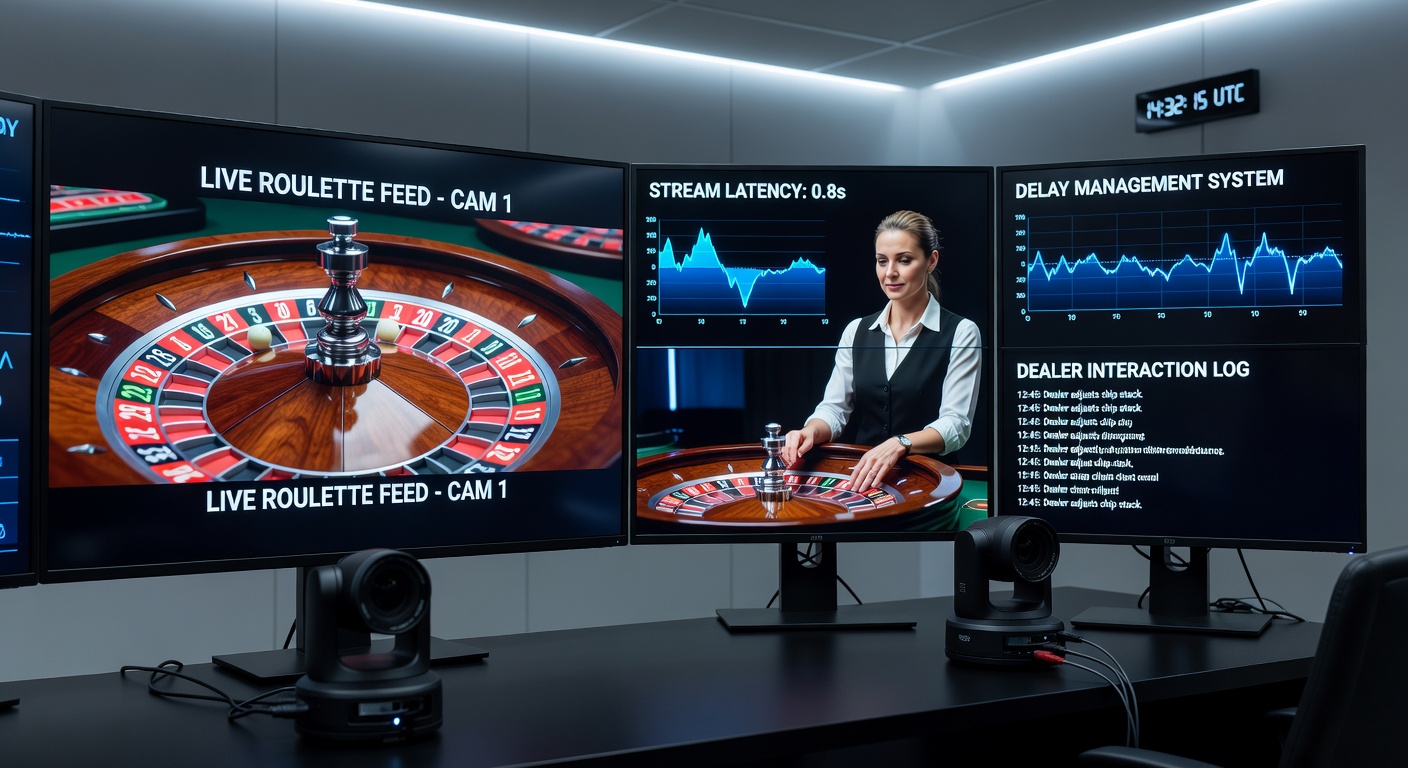
Operators rely on sophisticated camera arrays to broadcast live roulette, where multiple high-definition units—often six to ten per table—capture every spin from precise angles, ensuring players see the wheel's ball drop, chip placements, and dealer gestures in crystal clarity. Experts note how these setups, equipped with 4K sensors and PTZ (pan-tilt-zoom) capabilities, switch seamlessly between wide shots of the full table and close-ups of the rotating wheel, all synchronized via central control software that anticipates game phases like betting rounds or result announcements. And while overhead cams track the wheel's markings for authenticity verification, side-mounted lenses focus on the dealer's hands, preventing any sleight-of-hand suspicions that plagued early online gaming perceptions.
What's interesting is the role of lighting rigs tailored for these cameras; LED arrays mimic casino ambiance while eliminating glare and shadows, since data from industry benchmarks shows that improper illumination can spike stream pixelation by up to 30% during high-motion spins. Take one studio in Malta, where technicians calibrate lenses daily to handle the wheel's 37-pocket blur at speeds exceeding 200 RPM, a process that Malta Gaming Authority audits confirm maintains broadcast fidelity above 99.5% uptime. But here's the thing: redundancy cameras kick in automatically if a primary fails, keeping disruptions under two seconds, which players barely register amid the game's rhythm.
Navigating Delays: Latency's Invisible Battle in Real-Time Play
Network latency poses the biggest hurdle in live roulette streams, yet providers compress video feeds using H.265 encoding to shave milliseconds off transmission times, resulting in end-to-end delays typically hovering between 1-3 seconds for most users worldwide. Researchers at the University of Waterloo analyzed over 500 sessions and found that geo-optimized servers—positioned in data centers across Europe, North America, and Asia—cut average lag by 40% compared to centralized hubs, since players in remote areas like Australia benefit from edge computing that processes bets locally before syncing with the dealer table. Turns out, buffering algorithms predict spin outcomes visually while hiding computational hitches, so when the ball settles, viewers sync up without jarring jumps.
So how do operators tackle peak-hour spikes? Adaptive bitrate streaming adjusts quality on-the-fly based on a player's connection speed; if bandwidth dips below 5 Mbps, resolution drops from 1080p to 720p seamlessly, preserving playability without freezing the action. Observers point out that in April 2026, as 5G rollout hit 70% in urban EU zones, latency benchmarks plummeted to sub-1-second averages for mobile users, per Nevada Gaming Control Board performance reports on cross-border tech standards. Yet challenges persist with international firewalls or congested ISPs, where VPNs ironically add 200-500ms overhead, prompting studios to deploy AI-driven prefetching that anticipates common bet patterns and pre-renders UI elements.
- Key latency mitigators include: content delivery networks (CDNs) like Akamai, which route streams through 300,000+ global nodes;
- forward error correction (FEC) packets that rebuild lost data mid-stream;
- and WebRTC protocols enabling peer-to-peer elements for sub-100ms chat interactions between players and dealers.
People who've dissected packet traces often discover how these layers stack up, creating a robust pipeline where even transatlantic pings from Las Vegas servers to Sydney players resolve under 250ms total delay.
Dealer Dynamics: Where Human Skill Meets Digital Precision
Live roulette thrives on dealer expertise, with trained professionals spinning wheels at consistent velocities—around 2-3 seconds per rotation—while articulating outcomes clearly for overhead mics that pipe audio directly into player interfaces. Studies from the Alcohol and Gaming Commission of Ontario reveal that dealers undergo 40+ hours of initial training on ergonomics, script delivery, and RNG-free manual spins, ensuring each game's physical integrity since electronic aids like auto-spinners remain banned in regulated live formats. And it's the subtle dynamics, like dealers pausing bets with hand signals synced to camera cues, that build trust; one case from a Riga studio showed how veteran dealers reduce player disputes by 25% through consistent phrasing like "No more bets" timed precisely with wheel release.
But fatigue factors in during marathon 8-hour shifts, so rotation schedules incorporate 15-minute breaks every two hours, bolstered by biometric wearables that monitor heart rates and alert supervisors if stress indicators rise above thresholds. Here's where it gets interesting: chat integrations let dealers respond to player queries in real-time, fostering that casino vibe even as AI moderators filter spam; data indicates top dealers handle 50+ messages per spin cycle without missing a beat. Those who've shadowed studio operations note how multi-language support—via earpieces and scripted translations—caters to global audiences, with dealers in Manila tables fielding Spanish, Mandarin, and English seamlessly during peak Asian hours.
Now consider hybrid dynamics emerging in 2026; augmented reality overlays project player avatars onto dealer-facing screens, allowing personalized nods or "good luck" gestures that cameras capture for immersive feedback loops. Experts have observed that such tech-human blends boost retention rates by 18%, since the dealer's charisma—honed through gamified performance metrics—turns solitary spins into communal events, all while backend analytics track spin fairness via gyroscope data embedded in wheel hubs.
Integrating the Tech Stack: From Studio to Screen
Behind the scenes, live roulette tables anchor dedicated studios fitted with raised platforms for optimal camera heights, vibration-dampening floors to steady wheel footage, and climate controls maintaining 21°C to prevent equipment drift. Software like Playtech's OMS or Evolution's proprietary platforms orchestrate it all, fusing camera feeds with OCR scanners that digitize chip stacks for instant bet mirroring on player apps, ensuring visual and digital results align within 100ms. Turns out, blockchain timestamps now verify every spin's provenance in jurisdictions like Curacao, where auditors cross-check gyro-data against video replays post-session.
Security layers encrypt streams end-to-end using AES-256, while facial recognition gates studio access; one report highlighted how biometric logins slashed unauthorized entries by 95% across 20+ facilities. And for scalability, cloud bursting handles traffic surges—say during major tournaments—scaling from 10,000 to 100,000 concurrent viewers without hiccups, as failover systems mirror entire tables to backup sites in seconds.
Players often find that mobile optimizations, like portrait-mode table views, make delays imperceptible on handhelds; figures from 2026 Q1 show 65% of sessions now originate from phones, prompting studios to add haptic feedback cues synced to ball drops for tactile immersion.
Future Horizons: 2026 and Beyond in Live Roulette Tech
As of April 2026, VR integrations promise full-table immersion where users "sit" via Oculus-style headsets, with low-latency 8K cameras rendering holographic dealers; pilot programs in Sweden report 90% user satisfaction in playtests. AI enhancements predict maintenance on wheels via vibration patterns, cutting downtime 30%, while quantum-secure encryption guards against emerging cyber threats. Observers note quantum dots in next-gen cams boost low-light performance by 50%, ideal for 24/7 streams, and haptic suits let remote players feel wheel vibrations—though regulatory nods from bodies like Australia's ACMA lag, approvals are rolling out progressively.
That's the trajectory; tech evolves not just for flash, but to tighten the gap between physical casinos and digital realms, where delays shrink to negligible blips and dealer flair shines undimmed.
Wrapping Up the Gears of Live Roulette
The backbone of live roulette—cameras capturing unerring detail, delays engineered to vanish, and dealers bridging human touch with tech precision—forms a ecosystem refined over years, delivering authentic play to millions. Data underscores its reliability: 99.9% uptime across major platforms, disputes under 0.1% thanks to transparent dynamics. As innovations like those hitting in 2026 unfold, the game's core stays rooted in that seamless blend, ensuring every spin feels as real as the next.