12 Jul 2026
Mapping Roulette's Historical Pathways Through Dealer Circuits and Localized Rule Shifts Across Regions
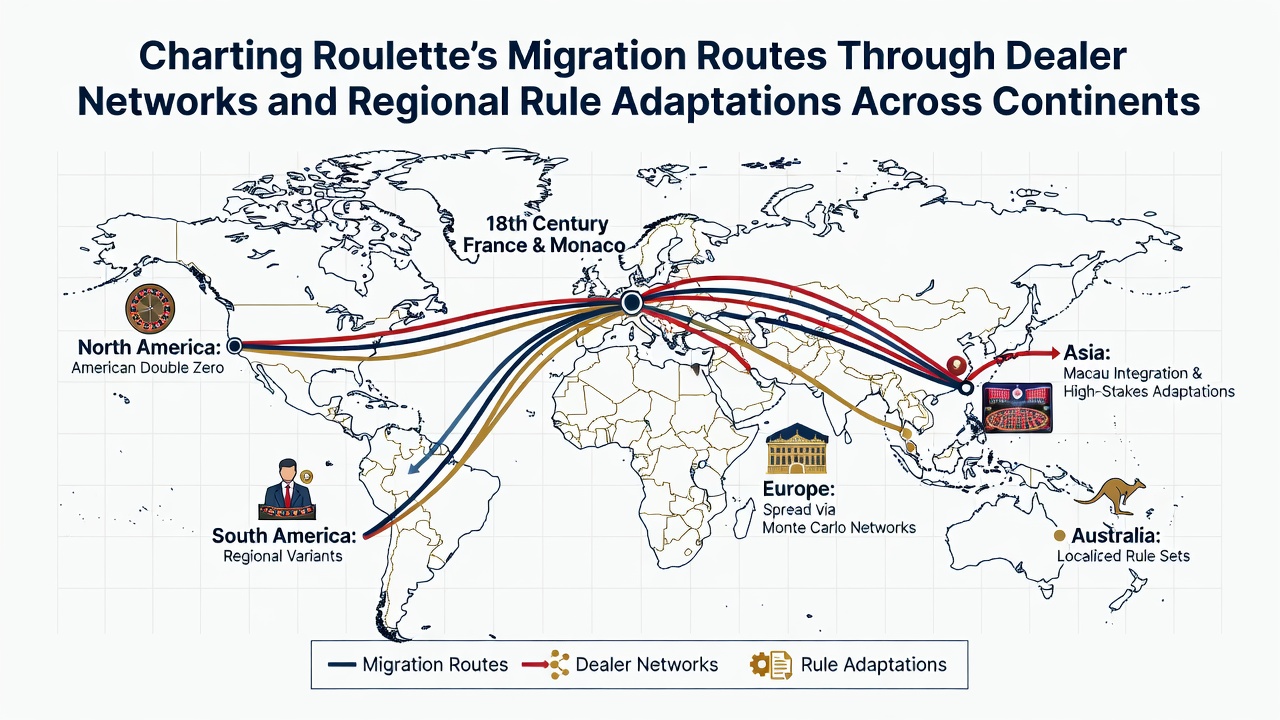
roulette traces its roots to 18th-century France where mathematicians and gamblers refined wheel-based games into the version recognized today; data from gaming archives shows early prototypes appeared in Paris salons around 1796 and featured a single zero on the wheel along with rules that allowed players certain recovery options after losses.
Early European Foundations and Dealer Training Systems
Dealers in France developed structured apprenticeship programs that emphasized precise wheel spins, chip handling, and table management while observers note these networks operated through family connections and casino guilds that passed knowledge across generations; research from European gaming histories indicates that croupiers often moved between establishments in Monte Carlo, Baden-Baden, and other resort towns which helped standardize core procedures before variations emerged elsewhere.
Rule adaptations stayed minimal within Europe during this period yet certain houses introduced local customs such as the en prison option that held losing bets for one more spin; these practices spread when dealers relocated to new venues and carried their preferred methods along.
Transatlantic Movement and North American Adjustments
Dealers crossed the Atlantic in the 19th century accompanying French and Italian operators who established gambling houses in New Orleans and later in western mining towns; records from the Nevada State Gaming Control Board show that American wheels incorporated a double zero by the mid-1800s which increased the house edge while simplifying some payout structures for faster play.
Networks of traveling dealers expanded rapidly after the California Gold Rush when circuits formed between riverboats and frontier saloons; those who studied these migrations find that rule changes often reflected local demands for quicker rounds and higher stakes with American variants dropping the en prison feature in most locations.
Expansion Into South America and Caribbean Variants
By the early 20th century dealer groups extended routes southward through Caribbean ports and into major South American cities where casinos adapted wheels to match regional preferences; evidence from Brazilian gaming records reveals single-zero wheels persisted in some venues while others adopted hybrid layouts that combined French and American elements to attract diverse tourist crowds.
Training passed through informal networks that linked Havana, Buenos Aires, and Rio de Janeiro operators who exchanged personnel seasonally; these movements coincided with regulatory shifts that required dealers to master multiple rule sets depending on the jurisdiction they served.
Asian and Australian Adaptations in the 20th Century
Dealer migration reached Asia after World War II when operators from Europe and the United States established properties in Macau and Manila; studies published by the University of Macau Gaming Research Centre indicate that local rules incorporated additional betting options such as neighbor bets while maintaining the double-zero wheel in many establishments to align with visitor expectations from North America.
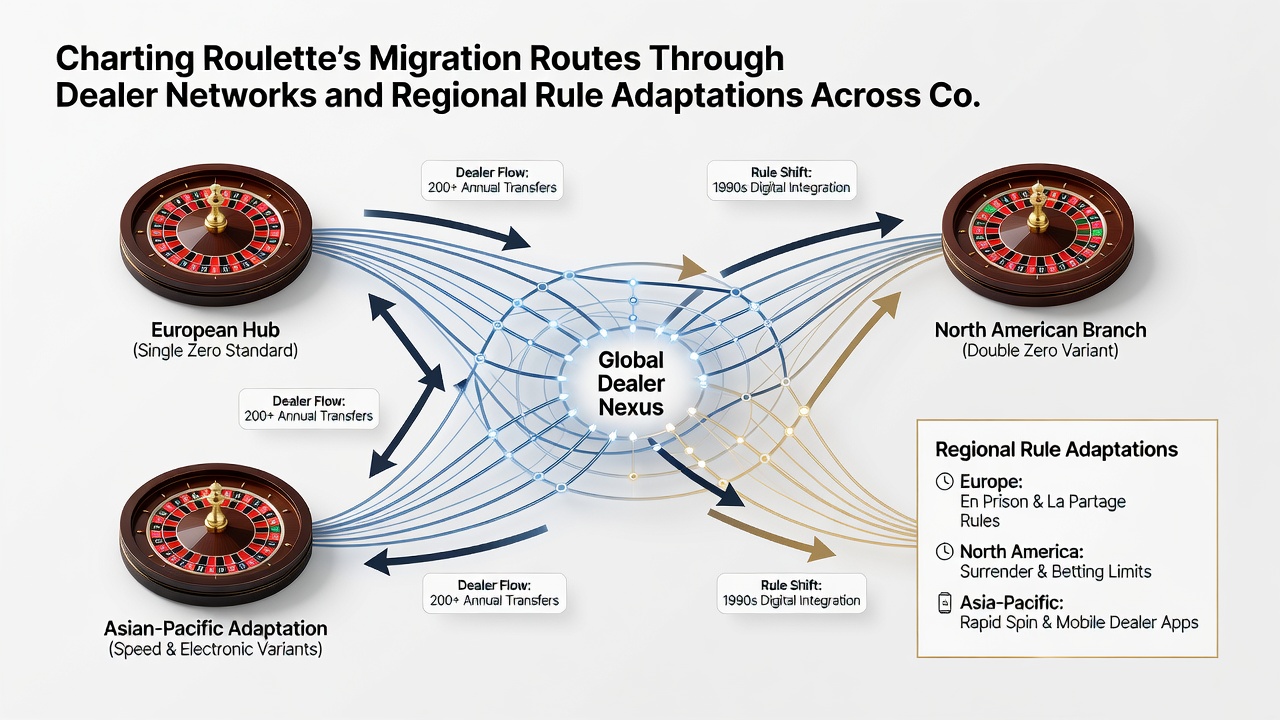
Australian developments followed similar patterns after legalization in the 1970s when dealers trained in both European and American styles to serve growing tourism markets; government reports from the Northern Territory reveal that venues often blended payout structures to accommodate international players with single-zero wheels appearing alongside double-zero options in the same facility.
Modern Dealer Networks and Cross-Continental Training
Contemporary circuits rely on international dealer schools and certification programs that operate in multiple countries; data collected through July 2026 shows increased movement between European training centers and Asian properties as operators seek staff familiar with varied regional customs and wheel configurations.
Rule adaptations continue to evolve through these networks with certain jurisdictions introducing electronic aids for payouts while preserving traditional wheel designs; observers note that dealers frequently carry knowledge of both live and automated systems which allows casinos to adjust offerings based on player demographics without retraining entire teams from scratch.
Conclusion
Patterns of roulette migration demonstrate how dealer networks serve as primary vehicles for transporting both mechanical practices and rule variations across continents while regional authorities shape final implementations according to local conditions; figures from multiple regulatory bodies confirm that these adaptations remain ongoing processes driven by economic factors and player preferences rather than fixed traditions.