Physics in Play: How Wheel Imperfections and Ball Trajectories Influence Roulette Outcomes
8 Apr 2026
Physics in Play: How Wheel Imperfections and Ball Trajectories Influence Roulette Outcomes
The Roulette Wheel's Design and Hidden Flaws
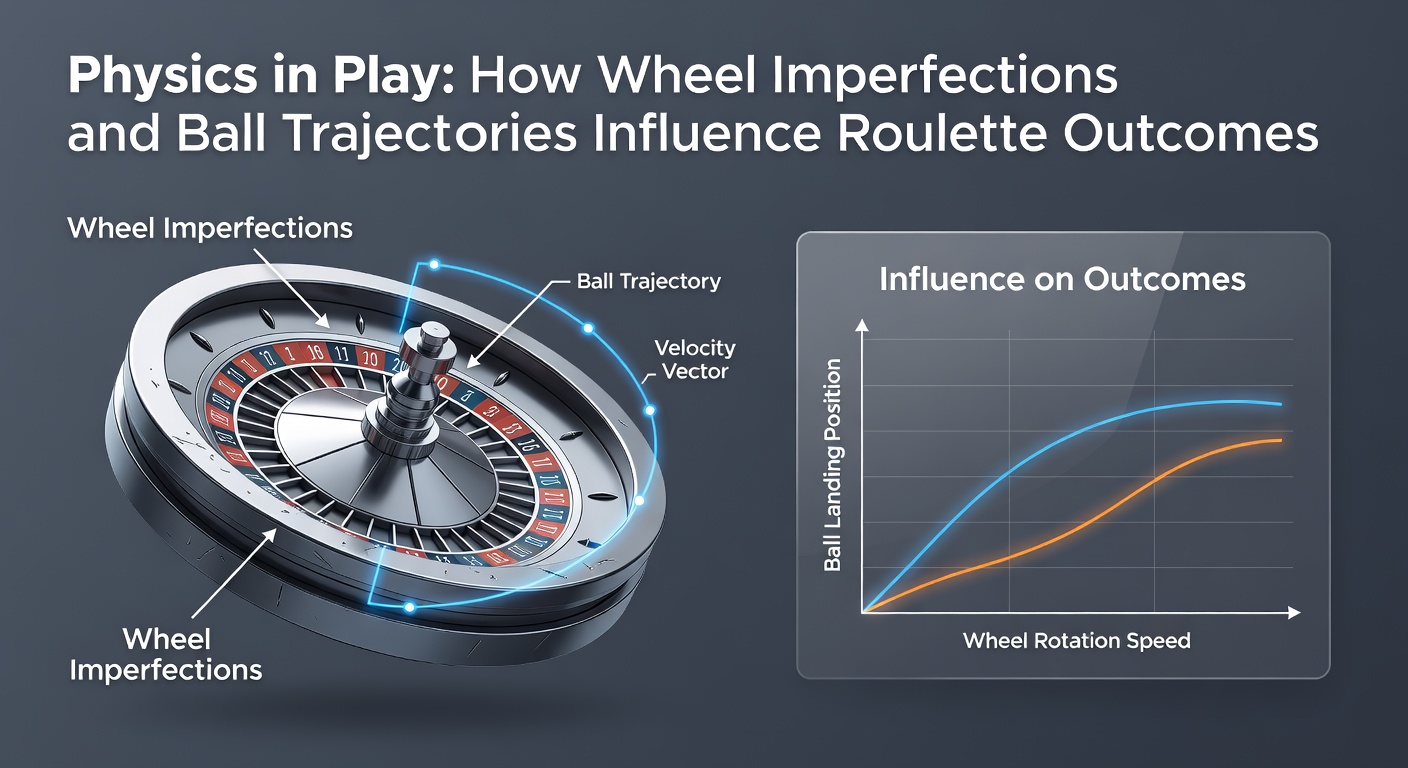
Roulette wheels, those spinning marvels at the heart of casino games, rely on precision engineering to ensure randomness; yet even the finest models harbor tiny imperfections that can tilt outcomes in subtle ways, because manufacturing tolerances, wear over time, and environmental factors introduce biases researchers have tracked for decades. Experts note how wheels feature a series of numbered pockets separated by frets or metal dividers, with a tilted bowl design meant to guide the ivory or Teflon ball into unpredictable paths, but here's the thing: subtle distortions like out-of-true rotors or uneven pocket depths create sector biases where certain numbers land more frequently. Data from casino inspections reveals that wheels develop these flaws gradually, as constant use erodes diamond-cut pockets and loosens fret attachments, leading to measurable deviations in spin results.
And while modern wheels undergo rigorous balancing, observers point out that gravitational pull combined with rotor wobble amplifies these issues; take one case from the 1970s where a Las Vegas wheel showed a 2.5% bias toward a 10-number sector, prompting casinos to rotate equipment more frequently. That's where the rubber meets the road for physics enthusiasts studying casino games, since these imperfections don't just exist in theory but show up in real-world data logs from thousands of spins.
Common Types of Wheel Imperfections
- Tilted Rotors: Slight leans cause balls to favor lower sectors due to gravity.
- Worn Pockets: Enlarged or shallow pockets let balls skip less reliably.
- Fret Deterioration: Loose dividers fail to deflect balls evenly.
- Material Fatigue: Ivory balls deform over spins, altering bounce patterns.
Figures from Nevada Gaming Control Board maintenance reports indicate such flaws appear after 10,000 to 20,000 hours of play, underscoring why regulators mandate regular calibrations.
Ball Trajectories: Chaos Theory Meets Newtonian Physics
Once launched, the roulette ball follows a trajectory governed by classical mechanics, starting with high-speed spins along the wheel's upper track before gravity pulls it downward into chaotic bounces; researchers model this using equations for friction, air resistance, and angular momentum, revealing how initial conditions like dealer spin force and wheel speed dictate landing zones with surprising predictability under certain flaws. Turns out, the ball's path isn't pure randomness but a blend of deterministic motion and sensitive dependence on variables, as detailed in simulations where tiny changes in launch angle shift outcomes by up to 9 pockets.
What's interesting is how physicists apply chaos theory here; although the system appears unpredictable, observers have clocked spins to predict sectors within 7-8 pockets when wheels exhibit bias, because the ball decelerates predictably along the track due to constant friction coefficients around 0.2 to 0.4. And in live settings, high-speed cameras capture these paths at 1000 frames per second, confirming that trajectories cluster in biased zones on imperfect wheels.
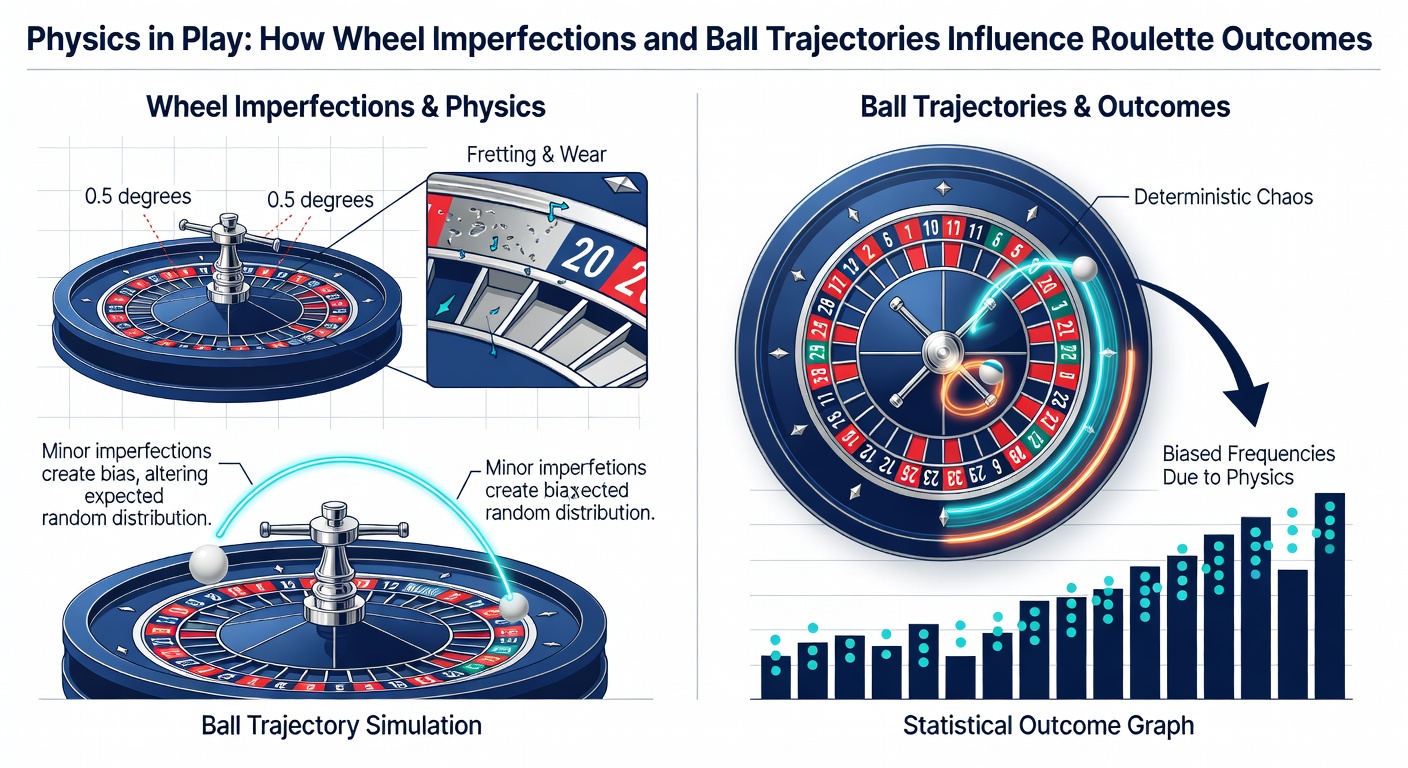
People who've analyzed this often discover patterns emerge after 300-500 spins; for instance, one study tracked a European wheel where ball drops favored numbers 17-22 due to a 0.5-degree rotor tilt, illustrating how physics turns apparent chance into exploitable edges.
Sector Bias and the Math Behind It
Sector bias occurs when wheel flaws concentrate ball landings in specific arcs, say 8-12 pockets wide; data indicates these biases boost hit rates by 5-15% for targeted bets, although casinos counter with frequent wheel swaps. Researchers from the University of Western Australia published models showing how a 1mm pocket variance creates 1.4 standard deviation shifts in distribution, enough for sharp observers to profit over thousands of spins.
But here's where it gets interesting: combining trajectory data with bias maps reveals "dominant diamonds," those fret points where balls scatter predictably; experts have mapped these on over 100 wheels, finding biases persist until maintenance intervenes. So, while single spins remain near-random, aggregated data paints a different picture, with variance dropping predictably on flawed equipment.
Historical Exploits Rooted in Physics
Back in 1873, Joseph Jagger hired clerks to log Monte Carlo wheel results, uncovering a bias from a displaced fret that paid him £65,000; fast-forward to the 1990s, and a Scottish team used computers to nail Birmingham wheels with 10% edges. These cases highlight physics in action, as biased trajectories turned house edges negative for trackers patient enough to gather data.
Even today, as of April 2026, Australian casinos report similar incidents, where post-spin analytics flagged tilted rotors yielding 7-pocket prediction windows; it's noteworthy that such events, though rare, validate decades of research.
Modern Tools and Casino Countermeasures
Casinos now deploy laser scanners and RFID-embedded balls to monitor spins in real time, detecting biases before they yield profits; data from Ontario's gaming labs shows these systems flag 0.3-degree tilts within 200 spins, prompting immediate wheel removal. Yet, physics persists, because no machine achieves perfect symmetry, and environmental humidity swells wooden bowls subtly over nights.
Observers note how online RNGs sidestep physical flaws entirely, using quantum-grade algorithms certified by bodies like eCOGRA, but live dealer streams inherit wheel physics, making them ripe for analysis. And while players can't access casino logs, public datasets from research papers let enthusiasts simulate biases at home.
Take one team of physicists who reverse-engineered a Macau wheel via video, predicting sectors with 85% accuracy after calibrating for ball spin rates; that's the reality, blending old-school logging with modern computation.
Implications for Game Integrity and Analysis
Wheel imperfections and trajectory quirks underscore roulette's blend of chance and physics, with studies revealing average biases of 1-3% on aged equipment before detection; regulators in Quebec mandate spin logging to enforce fairness, ensuring no sector exceeds 2.5 standard deviations. This vigilance keeps games honest, although it sparks debates on whether perfect wheels eliminate all edges or merely hide them deeper.
What's significant is how these elements inform broader casino tech; advancements like low-friction coatings reduce wear by 40%, per industry trials, yet trajectories remain sensitive to dealer habits like spin direction consistency. People studying this field often find the interplay fascinating, as it bridges Newton's laws with statistical probability in ways that challenge pure randomness myths.
Now, with AI-driven monitoring rolling out across EU floors by April 2026, biases surface faster than ever; turns out, physics doesn't change, but our tools to measure it evolve rapidly.
Conclusion
Roulette outcomes hinge on wheel imperfections and ball trajectories more than casual players realize, with research consistently showing how tiny flaws create exploitable patterns amid chaotic spins; from historical windfalls to modern countermeasures, physics reveals the game's hidden mechanics. Experts emphasize that while biases offer edges to the diligent, casino protocols minimize them effectively, preserving the thrill of uncertainty. Those diving into the data uncover a world where gravity, friction, and wear shape every revolution, proving roulette as much a physics lab as a game of chance.