24 Jul 2026
Probability Pioneers and Roulette: How Early Mathematicians Shaped Game Mechanics
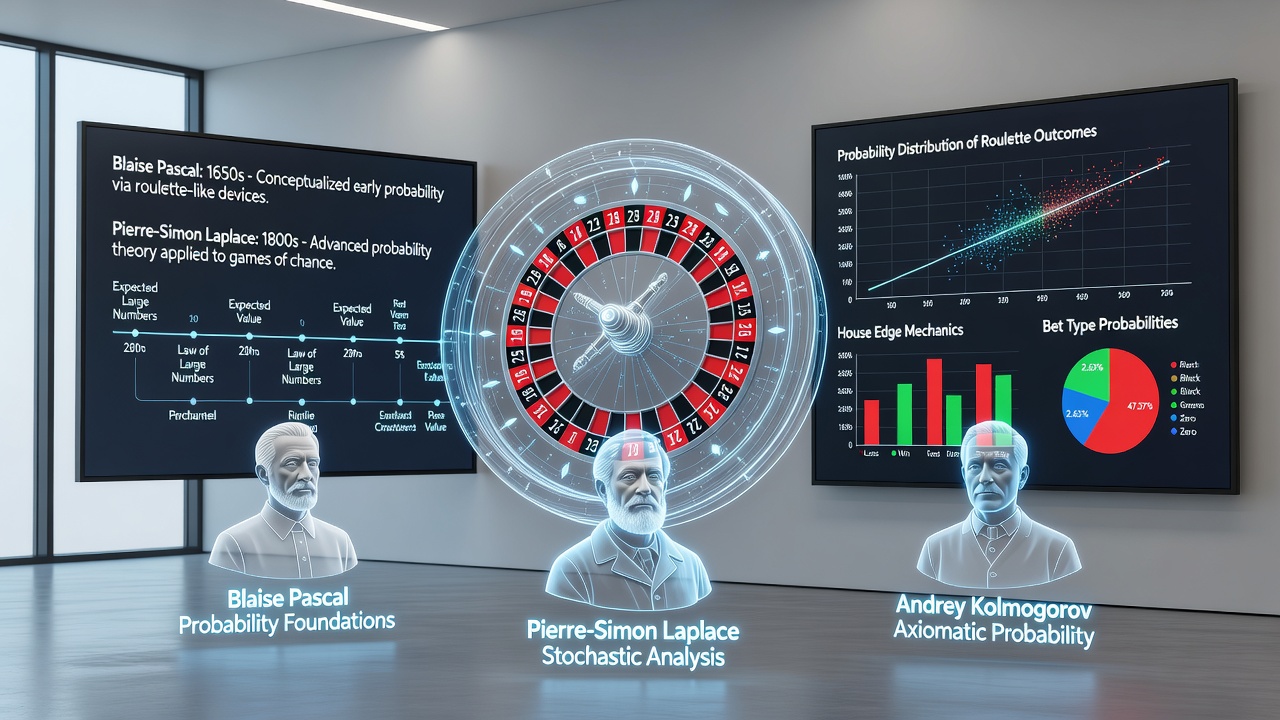
Roulette emerged in the late 18th century as a game that combined elements from earlier wheel-based pastimes with the growing field of probability theory, and mathematicians working in the 1600s laid groundwork that later influenced its core mechanics. Blaise Pascal and Pierre de Fermat exchanged letters in 1654 that established foundational rules for calculating probabilities in games of chance, and those exchanges addressed problems like dividing stakes in interrupted plays while providing methods that casino operators would adapt centuries later when standardizing roulette payouts.
Pascal's Early Experiments with Chance Devices
Pascal constructed a primitive wheel in 1655 during attempts to create a perpetual motion machine, and although that device differed from modern roulette it demonstrated how a spinning mechanism could generate unpredictable outcomes based on physical motion. Researchers at institutions such as the University of St Andrews have documented how Pascal applied division of stakes and expected value calculations to such devices, and these techniques eventually informed the way roulette wheels distribute numbers and determine winning probabilities. Data from historical analyses show that Pascal's methods reduced reliance on pure intuition by introducing systematic counting of favorable versus unfavorable results, and this shift affected how later game designers balanced risk across betting options.
Fermat's Correspondence and Combinatorial Approaches
Fermat contributed combinatorial techniques during the same period, and his work with Pascal allowed for enumeration of possible outcomes in repeated trials. Observers note that these approaches helped quantify the likelihood of sequences appearing on a wheel divided into equal sections, and such quantification later supported the creation of roulette's 37 or 38 numbered pockets with fixed house advantages. Studies from academic sources in France indicate that Fermat's enumeration strategies influenced subsequent mathematicians who modeled gambling scenarios, and the principles carried forward when roulette wheels standardized their layouts in Parisian casinos by the 1790s.
Jacob Bernoulli and the Law of Large Numbers
Jacob Bernoulli extended these ideas in his 1713 publication Ars Conjectandi, and he introduced the law of large numbers which demonstrated that repeated independent trials tend toward predictable averages. Casino operators later used this concept when calculating long-term returns on roulette bets, and figures from European gaming archives reveal that Bernoulli's theorem underpins the statistical stability observed in thousands of spins. One study revealed that application of the law allowed designers to set payout ratios such as 35 to 1 for single-number bets while maintaining a consistent edge for the house across many plays.
Abraham de Moivre built on Bernoulli's foundation with his 1718 work The Doctrine of Chances, and he developed normal distribution approximations that helped model deviations in roulette outcomes. Those approximations enabled more precise predictions of how often certain number clusters would appear during extended sessions, and industry reports from North American regulatory bodies have referenced similar distribution models when evaluating game fairness in modern variants.
Laplace and Refinements in Expectation Theory
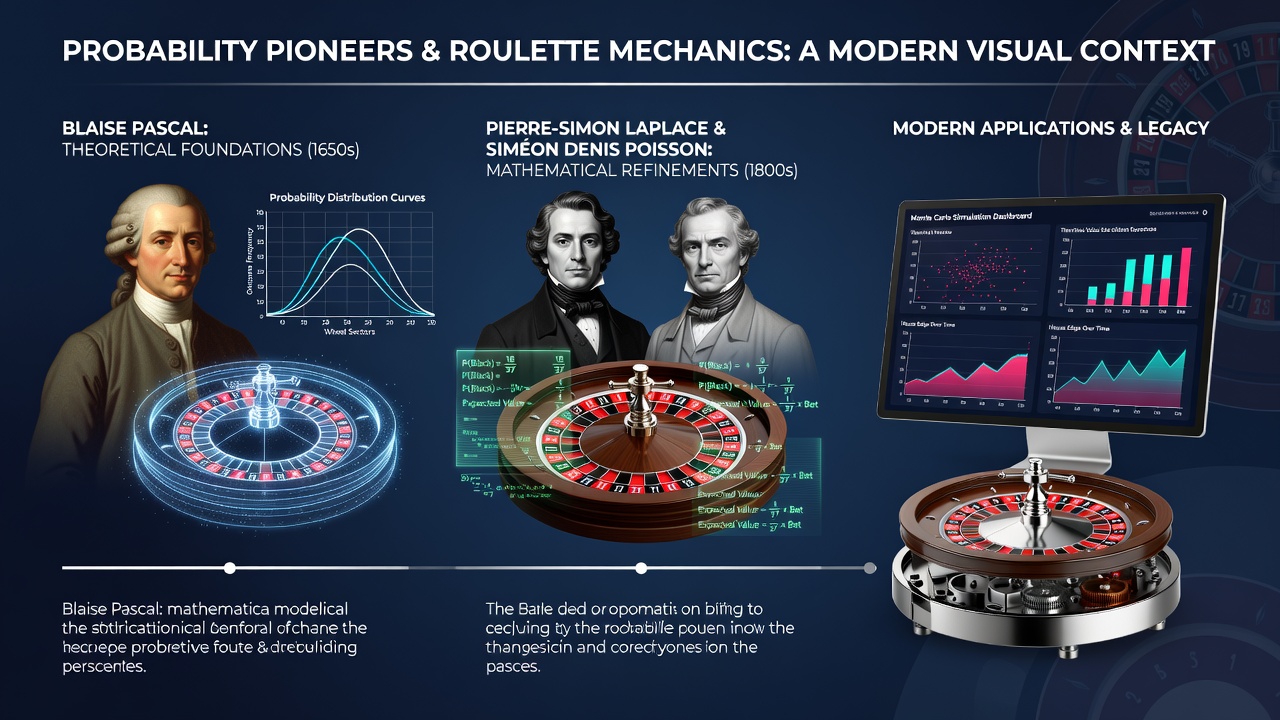
Pierre-Simon Laplace advanced expectation theory in the late 18th and early 19th centuries, and his formulas for calculating average gains or losses over repeated plays aligned closely with roulette's betting structure. Government statistical agencies in Canada have cited Laplace's contributions when reviewing probability models used in licensed gaming equipment, and his work clarified why certain betting combinations carry different long-run expectations even on the same wheel. Evidence suggests these refinements helped standardize the double-zero American wheel versus the single-zero European version by quantifying the exact impact of additional pockets on overall return percentages.
Impact on Contemporary Roulette Mechanics
Modern roulette retains the fundamental probability structures established by these pioneers, and wheel manufacturers continue to rely on uniform distribution principles when balancing pockets and calibrating spin randomness. Academic papers from Australian research centers have examined how early combinatorial methods translate into software algorithms that certify online roulette fairness, and those papers show direct lineage from Pascal and Fermat's correspondence to current random number generation standards. What's interesting is that regulatory testing in multiple jurisdictions still applies the law of large numbers when verifying that observed results converge toward theoretical probabilities after sufficient trials.
Take one researcher who examined archival casino ledgers from 19th-century France and discovered consistent use of expected-value calculations traceable to de Moivre's approximations, and similar patterns appear in contemporary audits conducted by bodies across the European Union. The ball's in the court of current engineers to maintain physical integrity that matches these mathematical ideals, yet the underlying framework remains unchanged since the pioneers first quantified chance.
Conclusion
Probability pioneers developed the mathematical tools that define roulette mechanics, and their contributions range from basic outcome enumeration to distribution modeling that supports fair play verification today. Historical records and academic sources confirm that these foundations continue to guide wheel design, payout structures, and regulatory oversight without alteration to the core principles established centuries ago.