21 Jul 2026
Regional Roulette Variations Shaped by Manufacturing Techniques and Cultural Traditions
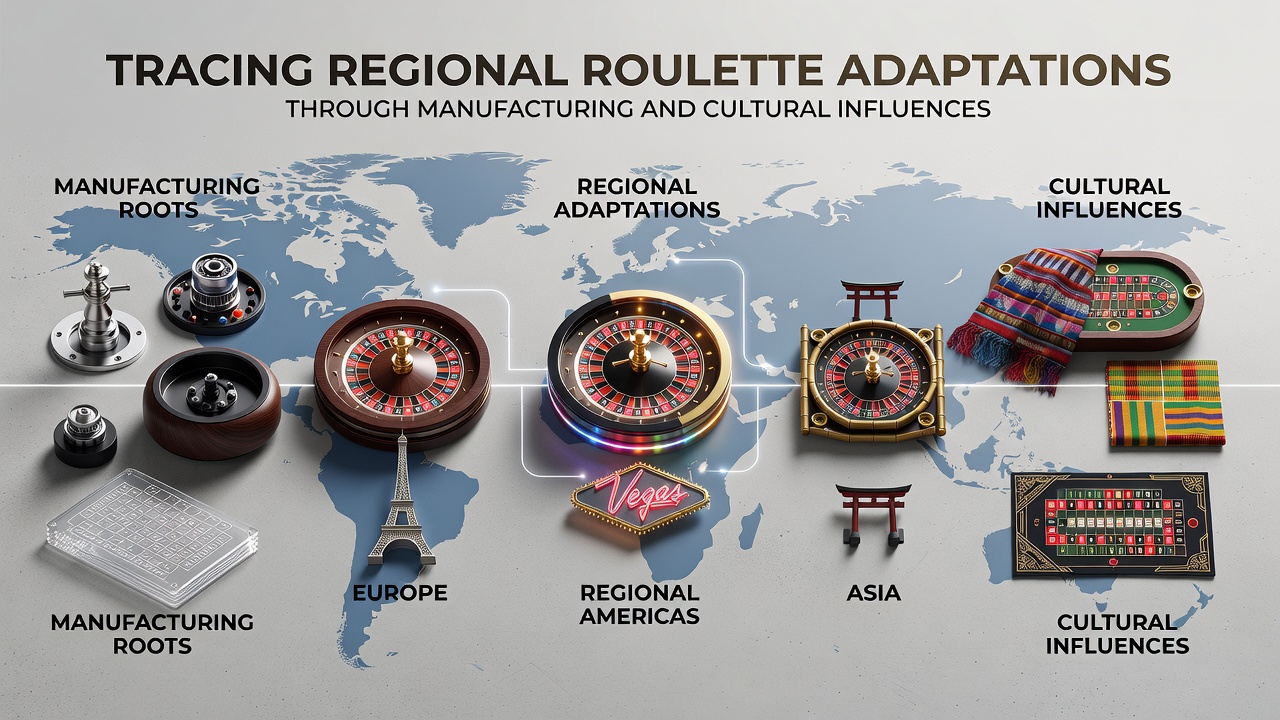
European roulette emerged in France during the late 18th century, where craftsmen developed single-zero wheels using brass and wood components that emphasized balance and minimal friction, while cultural preferences for measured pacing influenced table layouts that allowed extended betting rounds. American manufacturers later adapted these designs by adding a second zero pocket, a change driven by both production efficiencies in the 19th century and the faster betting rhythms favored in frontier gambling halls. Observers note that these early modifications established distinct regional identities that persist in contemporary wheel construction and gameplay pacing.
European Manufacturing Foundations and Cultural Context
French workshops refined roulette wheel production through hand-turned axles and ivory or celluloid pockets, techniques that ensured consistent spin durations according to historical production records from Parisian ateliers. Cultural emphasis on refined social gatherings shaped the inclusion of neighbor bets and call bets, features that require dealer interaction and extend the time between spins. Data from European gaming archives shows that wheel diameters stabilized around 80 centimeters by the mid-1800s, a size that accommodated larger crowds without sacrificing precision. German and Italian manufacturers later contributed hardened steel bearings that reduced maintenance intervals, allowing casinos in those regions to maintain higher table utilization rates.
North American Adaptations in Production and Play Style
American producers introduced the double-zero configuration during the 1800s expansion of riverboat and saloon gaming, where manufacturing shortcuts such as simpler pocket dividers lowered unit costs while aligning with local expectations for quicker resolutions. Nevada Gaming Control Board reports indicate that wheel specifications in the state evolved to accommodate higher volumes of play, incorporating aluminum separators that resisted wear from frequent ball drops. Cultural factors including shorter attention spans and higher table minimums encouraged layouts that eliminated certain call bet options common in Europe, resulting in streamlined felt designs still visible in many North American properties. Those who've examined surviving 19th-century wheels observe that the added zero pocket represented both a mechanical adjustment and a response to regional profit models.
Asian Regional Developments and Material Innovations
Manufacturers in Macau and Singapore adapted wheel construction during the late 20th century by integrating electronic sensors into the wooden frames, a response to regulatory requirements for automated result verification that differ from mechanical traditions in the West. Cultural practices around group betting and longer contemplation periods led to table configurations that include side betting areas absent from standard European or American setups. Research from the Asian Gaming Association indicates that wheel spin times in these markets average slightly longer than in Las Vegas properties, correlating with player preferences for extended decision windows. Production facilities in the region began sourcing carbon-fiber composites around 2015, materials that maintain structural integrity under humid conditions common in tropical climates.

One production case documented by industry analysts revealed that Australian suppliers developed hybrid wheels combining traditional brass frets with polymer pockets, an innovation that addressed both durability concerns and local cultural expectations for consistent ball behavior across extended sessions. These modifications emerged alongside regulatory frameworks from the Australian Communications and Media Authority that emphasize transparent outcome verification, prompting manufacturers to embed tracking technology without altering the visible aesthetic of the wheel.
Contemporary Shifts and Cross-Regional Exchanges
Global supply chains have accelerated the exchange of manufacturing methods since the early 2000s, with European firms adopting sensor arrays previously refined in Asian facilities while North American plants incorporate precision balancing techniques originating in French workshops. A July 2026 industry summit scheduled in Lisbon will examine how cultural attitudes toward risk influence wheel diameter preferences across markets, building on data collected from operational tables in multiple jurisdictions. Evidence from trade publications shows that these exchanges have narrowed some mechanical differences, yet regional betting conventions remain distinct because they reflect entrenched player habits rather than production constraints alone.
Observers tracking supply data note that raw material sourcing continues to vary by region, with North American producers favoring domestically milled aluminum and European facilities retaining preferences for traditional hardwoods in non-critical components. Such choices affect both maintenance schedules and the tactile experience reported by dealers who handle the equipment daily.
Conclusion
Manufacturing practices and cultural expectations have jointly determined how roulette wheels and table layouts evolved across regions, producing measurable differences in pocket configuration, material selection, and betting procedures. Regulatory bodies and production records document these adaptations without implying any single origin point, while ongoing material innovations suggest further convergence in mechanical standards alongside persistent variation in gameplay conventions. Those examining the historical record find that each regional form represents a practical response to local conditions rather than a universal template.