31 May 2026
Roulette Wheel Materials Shape Random Outcomes Through Precise Construction Standards
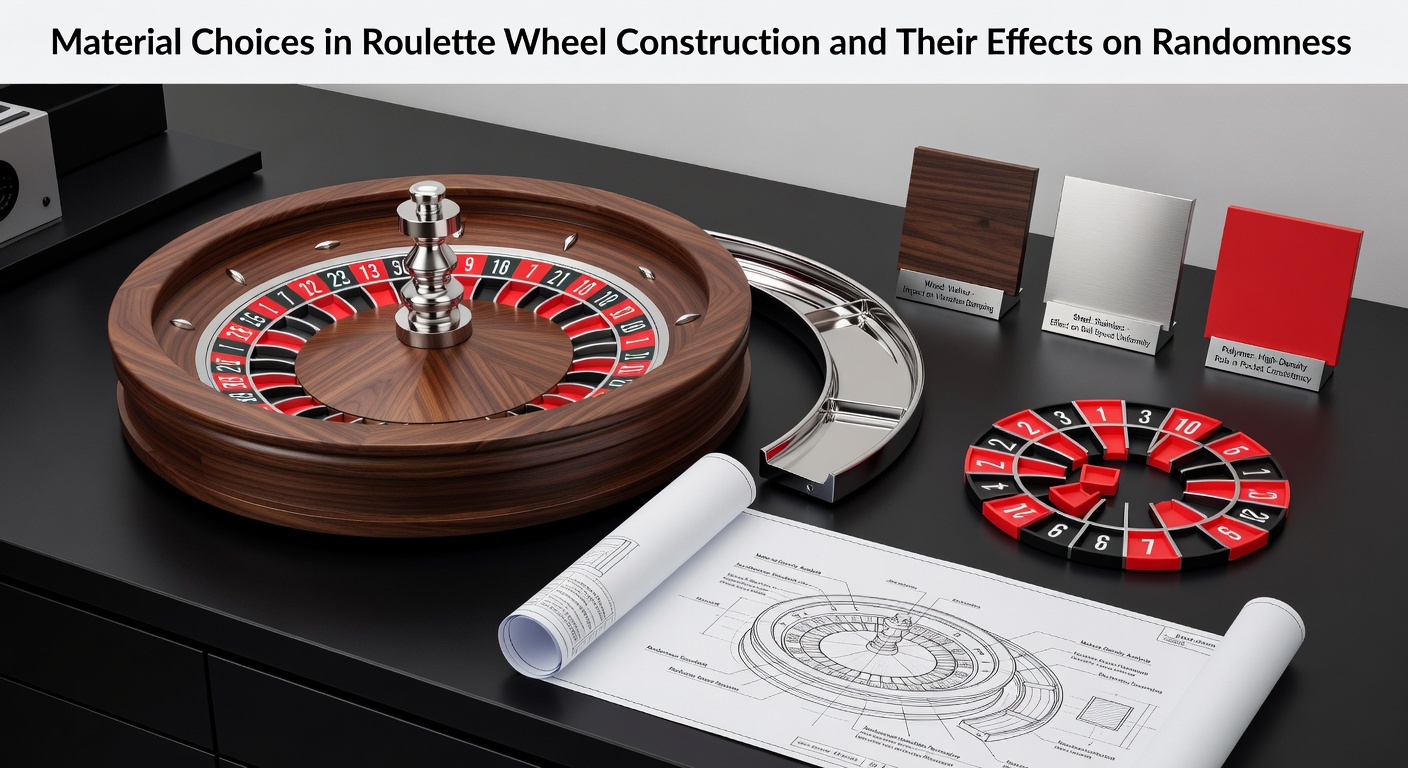
Roulette wheels rely on specific material selections to maintain balance and promote unpredictable ball movement across the track and pockets, with manufacturers selecting hardwoods, metals, and composites that meet regulatory tolerances for friction and weight distribution. Observers note that early wheels incorporated mahogany bases paired with brass pocket separators, whereas contemporary designs favor layered composites that resist warping under constant use in high-volume environments.
Historical Material Selections in Wheel Assembly
Wheel builders once turned to dense hardwoods such as oak and rosewood for the main bowl structure because these timbers offered dimensional stability when humidity fluctuated inside casino halls, and they paired the wood with ivory or bone ball tracks that delivered consistent surface resistance. Data from equipment archives shows that pocket dividers crafted from polished brass reduced static buildup compared with earlier iron versions, yet those same brass components required frequent polishing to prevent oxidation that could alter ball deflection angles over time.
And yet manufacturers shifted toward aluminum separators by the mid-twentieth century because aluminum lowered overall wheel mass while preserving the rigid geometry needed for even pocket spacing. Those who've examined preserved wheels from that era find that the change coincided with the introduction of synthetic ball materials that replaced scarce ivory supplies.
Contemporary Materials and Manufacturing Tolerances
Modern production draws on phenolic resins and carbon-fiber-reinforced polymers for the wheelhead because these substances maintain flatness across temperature swings that occur in climate-controlled gaming floors. The ball track itself often receives a thin veneer of polished stainless steel or acetal plastic, each selected for its coefficient of friction that allows the ball to decelerate at predictable rates before dropping into a pocket. Research indicates that pocket walls formed from anodized aluminum or titanium alloys resist denting from repeated ball impacts, which preserves the critical 90-degree angles between adjacent separators.
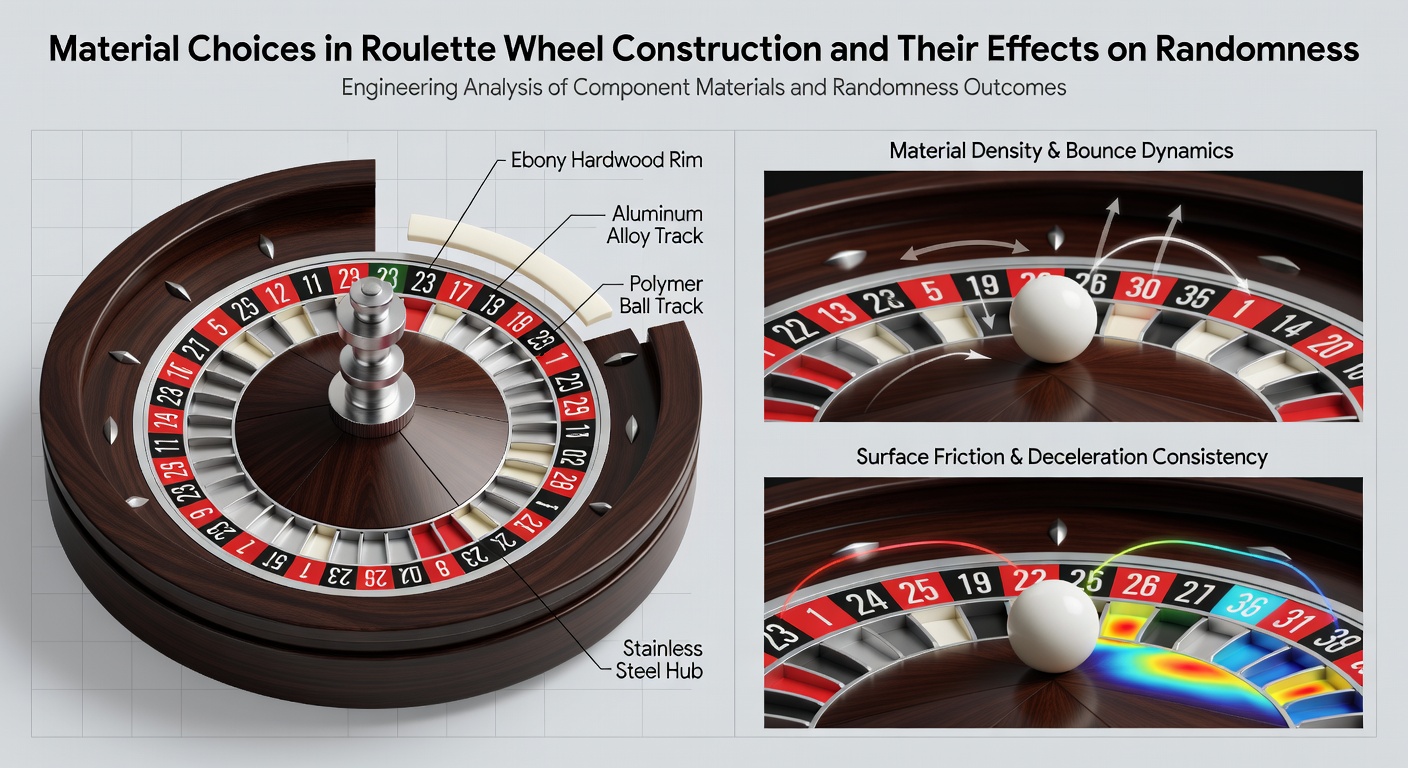
According to specifications published by the Nevada Gaming Control Board, wheel assemblies must undergo dynamic balancing tests that detect deviations as small as 0.1 grams, and material density uniformity directly influences whether a wheel passes those checks on the first attempt. In May 2026 several European testing laboratories reported updated calibration protocols that incorporate laser scanning of composite surfaces to verify surface roughness remains within 0.05 millimeter tolerances.
Friction, Balance, and Randomness Correlations
Material pairings affect how energy dissipates during each spin cycle, since a slightly softer track surface increases rolling resistance and shortens the number of revolutions before the ball settles. Studies conducted at technical institutes in Germany demonstrate that wheels using hybrid metal-polymer tracks produce spin durations within a narrower statistical band than all-wood predecessors, thereby reducing opportunities for mechanical bias to emerge. Observers note that pocket floors lined with felt or thin felt-backed composites absorb minor vibrations that might otherwise transfer to the rotor assembly and create micro-variations in deceleration patterns.
Yet the same research reveals that overly absorbent materials can trap microscopic debris, which gradually changes local friction coefficients and requires scheduled resurfacing to restore original randomness parameters. Data collected across multiple casino fleets shows that wheels rebuilt with consistent phenolic pocket inserts maintain outcome distributions closer to theoretical probabilities over longer operational periods than those rebuilt with mixed-material components.
Regulatory Testing and Material Certification
Certification bodies in Australia and Canada require independent laboratories to subject sample wheels to thousands of automated spins while recording pocket hit frequencies, and material certificates must accompany each submission to confirm that resins and metals meet declared density specifications. Those who've reviewed certification reports find that deviations in filler content within composite sections sometimes produce measurable clustering in early test runs, prompting manufacturers to refine molding processes before final approval. A 2024 industry report from the European Casino Association highlighted that wheels incorporating certified low-static polymers experienced fewer rejections during random-number validation audits compared with earlier generations that used untreated plastics.
Because material traceability now extends from raw polymer batches to finished assemblies, regulators can trace any future performance drift back to specific production lots when anomalies appear.
Conclusion
Material choices in roulette wheel construction directly determine whether balance and friction characteristics remain within the narrow windows that support statistical randomness, and ongoing refinements in composites and metal treatments continue to align equipment performance with regulatory benchmarks across multiple jurisdictions. Continued laboratory verification ensures that each new wheel generation meets the same physical criteria that protect outcome unpredictability in live play.