25 Aug 2026
Roulette Wheels and the Dawn of Computational Randomness
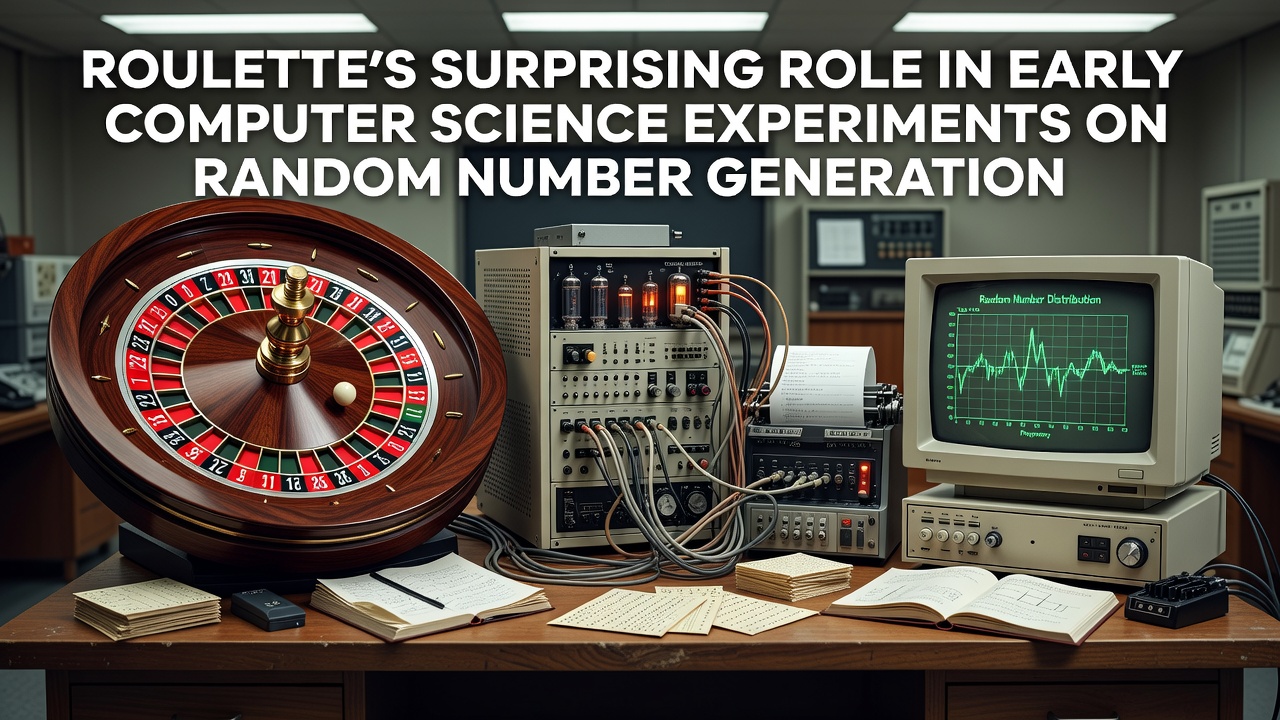
Early computer scientists faced a persistent challenge when they needed sequences of truly unpredictable numbers for simulations, and physical roulette wheels provided one practical solution before electronic generators became reliable. Researchers in the 1940s turned to mechanical devices because mathematical algorithms alone could not yet deliver the statistical randomness required for complex calculations on machines like ENIAC.
The Monte Carlo method, developed during the Manhattan Project, demanded vast quantities of random inputs to model neutron behavior, and teams led by John von Neumann and Stanislaw Ulam recognized that physical sources offered an immediate workaround. Observers note that roulette wheels, with their balanced pockets and spinning action, produced digits free from the patterns that plagued early pseudo-random routines.
The RAND Corporation's Mechanical Approach
In 1947 the RAND Corporation constructed a specialized roulette wheel connected to an electronic pulse counter, allowing operators to record thousands of outcomes per hour while minimizing human bias. Data from these runs formed the basis of the 1955 publication A Million Random Digits with 100,000 Normal Deviates, a reference table still cited in statistical literature today. Engineers adjusted the wheel's speed and used vacuum-tube circuits to capture results automatically, creating a hybrid system that bridged mechanical chance and digital recording.
Figures from the project reveal that each digit underwent multiple verification passes to ensure uniformity across the entire set. Those who examined the tables later confirmed that the distribution matched theoretical expectations within acceptable margins, validating the roulette method for its era. Yet mechanical wear eventually prompted RAND to explore alternative techniques, including electronic noise sources.
Integration with Early Computing Hardware
Computer operators at Los Alamos and other facilities sometimes attached small roulette-like mechanisms directly to mainframes so that programs could request fresh random values during runtime. These attachments converted wheel positions into binary strings that the machine could process alongside its stored instructions. Researchers discovered that careful calibration reduced mechanical drift, although dust and friction still introduced occasional deviations that required post-processing corrections.
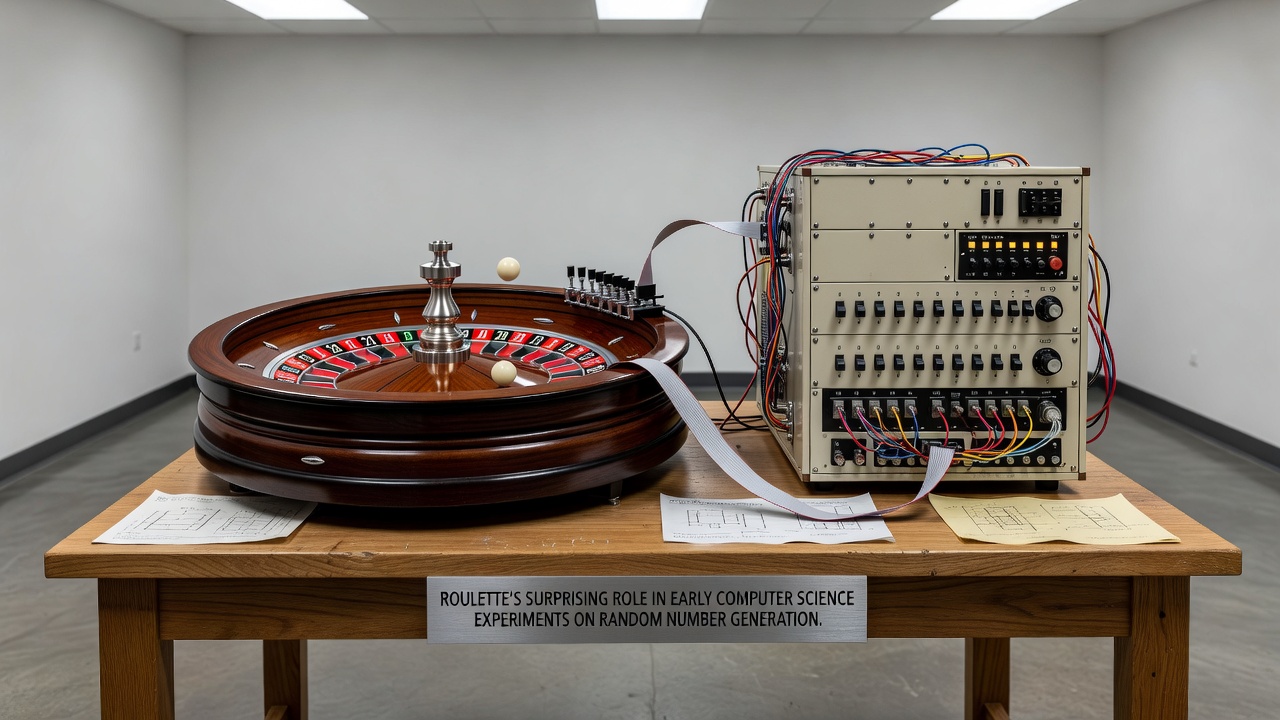
By the early 1950s several academic groups in the United States and Europe experimented with similar hybrids, comparing roulette-derived sequences against tables generated by punched-card machines. Studies found that physical wheels performed comparably for short runs, while longer sequences benefited from mixing outputs from multiple independent wheels to further decorrelate results.
Statistical Validation and Limitations
Statisticians applied chi-square and serial correlation tests to the roulette outputs, confirming acceptable randomness for Monte Carlo work while also documenting subtle biases that emerged after thousands of spins. Government reports from the era, including those issued by the U.S. National Bureau of Standards, outlined procedures for detecting and discarding flawed segments. Observers note that these validation steps laid groundwork for later standards in random number testing still referenced by organizations such as NIST today.
Mechanical limitations became evident as computers grew faster, because wheel spin rates could not keep pace with instruction cycles. Engineers therefore shifted toward electronic noise amplifiers and radioactive decay counters, yet the conceptual foundation established by roulette experiments influenced the design of subsequent true-random generators.
Legacy in Modern Random Number Research
Contemporary studies of historical computing practices continue to examine the RAND tables as a benchmark, and archivists have digitized portions of the original wheel logs for analysis by new statistical tools. Universities in Canada and Australia maintain replicas of early mechanical generators to demonstrate the transition from physical to algorithmic randomness for students. Data indicates that the roulette method's influence persists in discussions of entropy sources within cryptographic hardware standards developed across multiple continents.
Conclusion
Roulette wheels served as a pragmatic bridge between theoretical probability and the practical demands of early digital simulation, supplying the first large-scale random digit collections that computers could not yet produce internally. Their documented use by RAND and affiliated laboratories illustrates how mechanical chance informed the architecture of modern random number generation, even as electronic alternatives eventually supplanted them.