21 Jun 2026
Roulette's Mark on 19th Century European Probability Studies
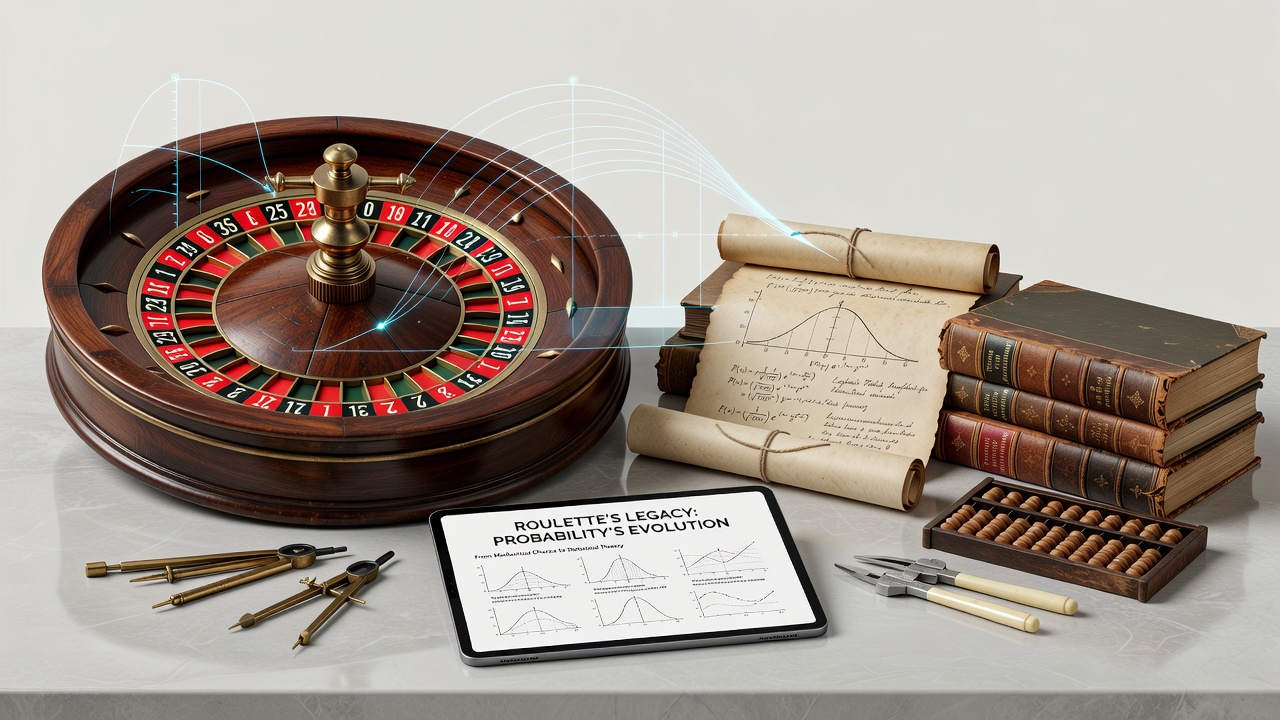
European scholars in the nineteenth century turned to mechanical devices like the roulette wheel as practical tools for testing ideas about chance and repeated outcomes, and the game itself supplied clear examples of independent events that could be counted and analyzed over many trials. Researchers in France, Germany, and Russia incorporated spinning wheels into laboratory setups because the device produced results that aligned with emerging theories of large numbers and distribution patterns, while the physical act of spinning allowed repeated observation without relying solely on abstract coin tosses or dice rolls.
Foundations in Chance Devices and Mathematical Modeling
Scholars built upon earlier work by figures such as Pierre-Simon Laplace, yet the nineteenth century brought renewed focus when experimenters constructed custom wheels to isolate variables like friction and balance; these setups let them gather data sets that could be compared against theoretical predictions. Data from such trials showed how outcomes clustered around expected frequencies as the number of spins increased, and this evidence helped refine statements of the law of large numbers that later appeared in textbooks used across European universities.
One study conducted in Paris during the 1830s recorded thousands of wheel spins to examine whether slight mechanical biases altered long-run results, and the collected figures revealed deviations that prompted further calibration of the apparatus. Observers noted that these experiments moved probability discussions away from purely philosophical debates toward measurable demonstrations that students could replicate in lecture halls.
Key Experiments Across European Centers
In Berlin, mathematicians adapted roulette-style mechanisms to study continuous distributions, connecting wheel results to emerging work on error theory and measurement precision. The same apparatus served multiple purposes: it generated random sequences for testing addition theorems while also illustrating the concept of equally likely cases that formed the basis of many probability definitions at the time. Researchers in Saint Petersburg extended these methods by running parallel trials with modified wheels that allowed control over segment sizes, and the resulting records contributed to early formulations of what became known as the central limit theorem applications in practical settings.
Equipment descriptions from laboratory notebooks indicate that wheels often featured thirty-seven or thirty-eight divisions to match casino standards of the period, which in turn allowed direct comparison between theoretical calculations and observed frequencies. Such alignment proved useful when scholars presented findings to both mathematical societies and audiences interested in games of chance. Figures compiled during these sessions typically included columns for observed counts, expected proportions, and cumulative averages that could be plotted to show convergence behavior over time.
Documentation and Publication of Results
Academic journals of the era published tables drawn from wheel experiments, and these tables circulated among readers in multiple countries because they supplied concrete numbers rather than hypothetical illustrations alone. A paper issued by the French Academy of Sciences in the 1840s, for instance, detailed spin sequences exceeding ten thousand trials and included calculations of variance that later influenced statistical methods taught at technical institutes. Similar reports from Vienna laboratories emphasized the importance of recording environmental factors such as temperature and humidity, since minor changes could affect wheel performance and therefore the reliability of the data collected.
Those who replicated the experiments often discovered that initial runs displayed greater scatter before settling into patterns predicted by theory, and this observation reinforced the value of large sample sizes in probability instruction. University curricula began incorporating wheel demonstrations as standard exercises, allowing students to generate their own data sets for comparison with published results.
Connections to Broader Scientific Developments
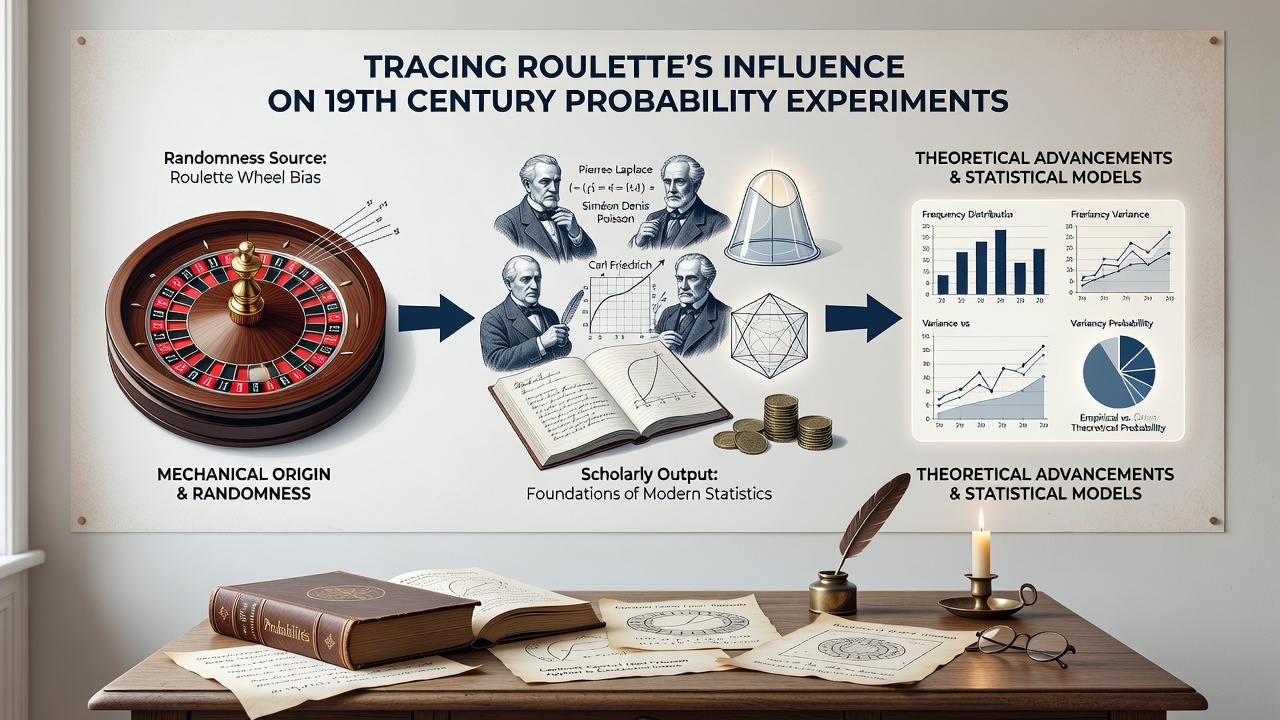
The influence extended beyond pure mathematics into fields such as physics and astronomy, where researchers applied the same counting techniques to model random errors in observational data. Roulette-derived examples appeared in discussions of molecular motion and heat theory, because the wheel provided an accessible analogy for systems involving many independent small effects. Conferences organized by the French Academy of Sciences featured presentations that traced these analogies explicitly, showing how mechanical randomness could stand in for more complex natural processes.
Archival records from the University of Göttingen contain correspondence between scholars who exchanged wheel specifications and calibration procedures, indicating an active network of experimenters who refined their methods through shared practice. These exchanges helped standardize reporting formats so that results from different cities could be compared directly without extensive reinterpretation.
Legacy in Educational and Research Practices
By the close of the nineteenth century, many probability textbooks included sections based on wheel experiments, and laboratory manuals for secondary schools began to list roulette-style devices among recommended apparatus. The physical demonstration helped bridge the gap between abstract formulas and observable outcomes, making concepts such as expectation and dispersion more tangible for learners who might otherwise encounter only symbolic notation. Data collected during these classroom trials often matched the patterns reported in earlier academic papers, confirming the repeatability of the underlying principles.
A symposium scheduled for June 2026 at the Sorbonne will examine surviving laboratory notebooks from these experiments, bringing together historians of mathematics and statisticians to reassess the original measurements with contemporary analytical tools. Such events highlight the continuing interest in how nineteenth-century equipment choices shaped the questions that probability researchers chose to pursue.
Conclusion
The roulette wheel functioned as both a practical instrument and a conceptual model throughout the nineteenth century, supplying European scholars with repeatable random processes that could be counted, tabulated, and compared against theoretical predictions. Records preserved in academy archives and university collections document the range of experiments conducted in Paris, Berlin, Vienna, and Saint Petersburg, while publications from those centers carried the findings to wider audiences. The methods developed during this period laid groundwork for later statistical education and research practices that continued into the twentieth century and beyond.