21 Aug 2026
Roulette's Spread: Tracing the Game Across Colonial Trade Networks and Local Variations
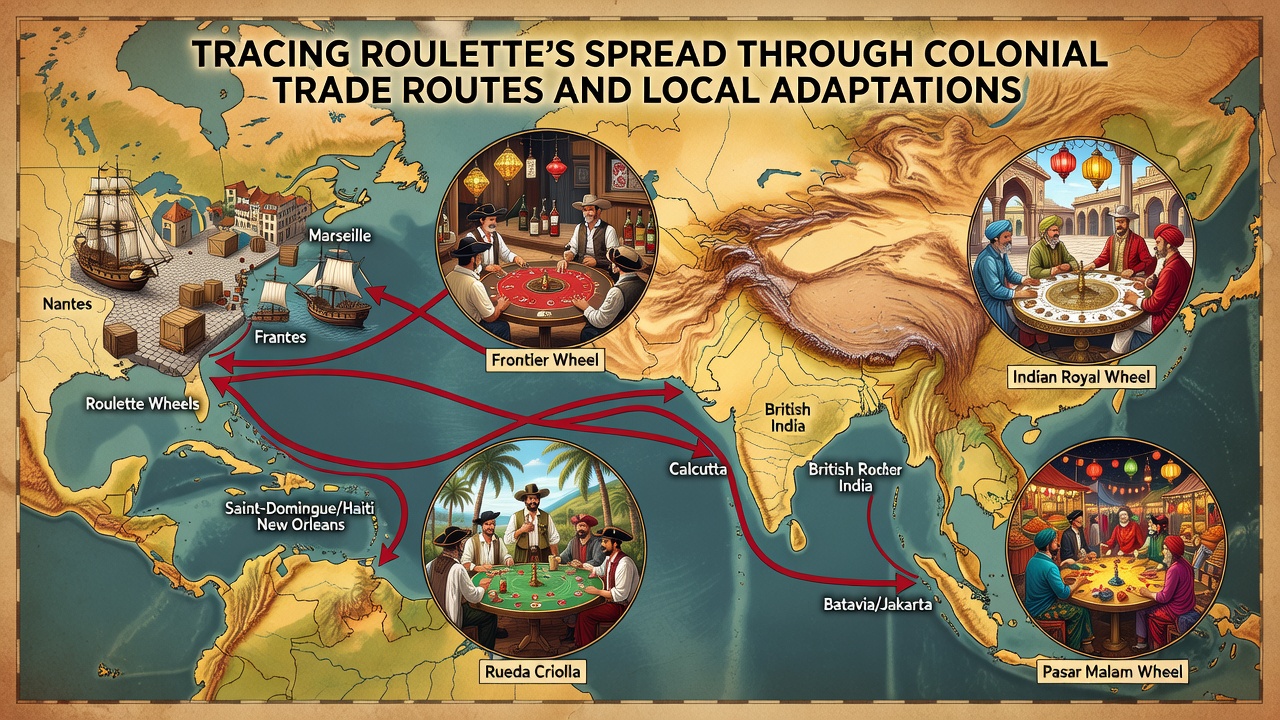
Historians trace roulette's development to 18th-century France where the game combined elements from older wheel-based pastimes such as Roly-Poly and Biribi, and records from Parisian archives show the first documented wheels appearing in the 1790s with both single and double zero pockets already in use. Trade records indicate that French merchants carried the game aboard vessels bound for Caribbean ports and North American colonies during the same period when sugar and tobacco formed the backbone of transatlantic commerce.
Maritime Networks and Early Global Movement
European powers established regular shipping lanes that connected ports in Bordeaux and Marseille to Havana, New Orleans, and later to Asian entrepôts such as Manila and Batavia, and these routes allowed roulette equipment to travel alongside other luxury goods. Shipping manifests preserved in Spanish and Portuguese archives list gaming apparatus among personal effects of colonial administrators, while British East India Company logs note similar items reaching Calcutta by the early 1800s. Local craftsmen in these new locations began replicating wheels using available materials, which produced variations in pocket spacing and wheel diameter that differed from the original French specifications.
Adaptations Across the Americas
In the United States, casino operators in the Mississippi River region introduced the double-zero wheel as a house advantage measure during the 19th century, and data from riverboat gambling ledgers show this configuration becoming standard in many venues by the 1840s. Mexican and South American establishments retained the single-zero format longer but incorporated local betting customs such as side wagers tied to regional festivals. Research from the Canadian Museum of History documents how French-Canadian settlements along the St. Lawrence adopted the game with minor rule adjustments that reflected existing card-game traditions already popular in those communities.
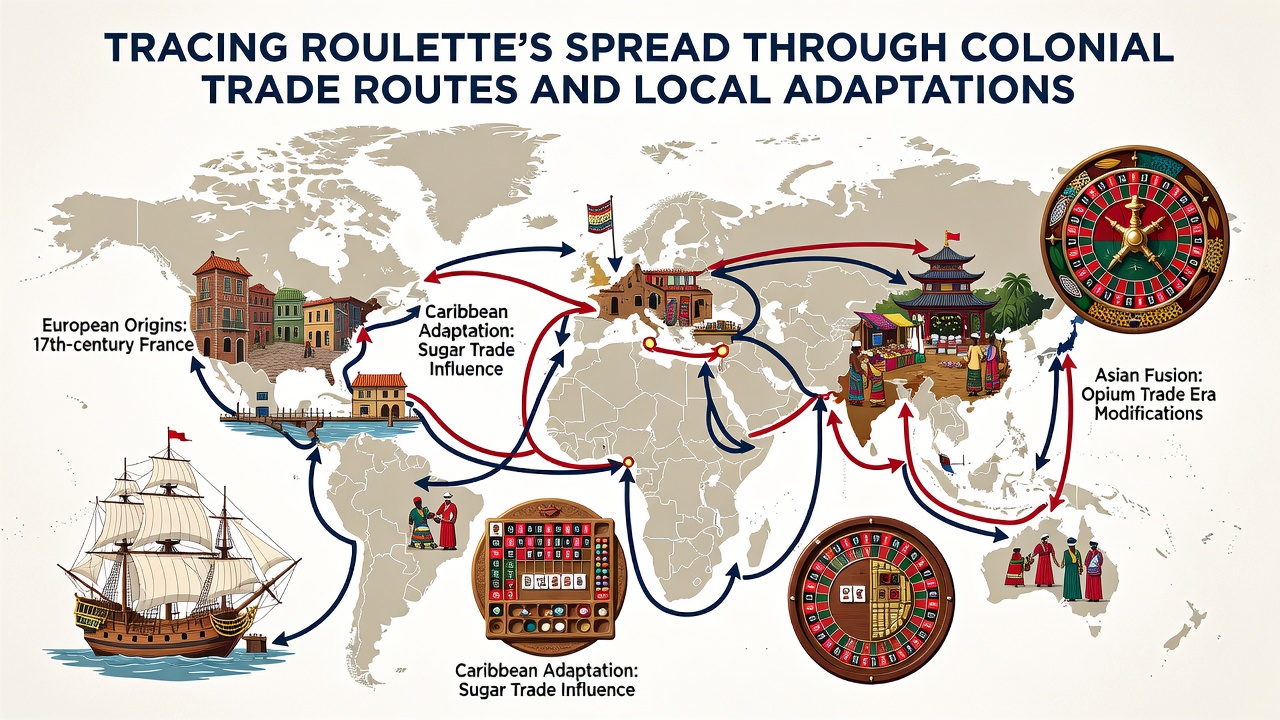
Asian and Pacific Exchanges
Colonial administrators and traders introduced roulette to port cities in India and Southeast Asia where local players integrated elements from traditional number games and dice contests, and observers recorded these hybrid rules in travel accounts from the 1820s onward. In Australia, gaming establishments that opened after British settlement modified payout structures to align with existing betting practices on horse races and card games, and figures from colonial licensing documents reveal steady growth in roulette tables through the mid-19th century. Japanese port cities that opened to foreign trade in the Meiji period saw similar introductions, though strict regulations limited public play until later decades.
African and Middle Eastern Developments
Trade routes along the Indian Ocean and Mediterranean carried roulette equipment to North African ports where French and Italian colonial presence influenced table layouts, and historical accounts note that local operators sometimes combined European wheel mechanics with number systems drawn from regional lotteries. Sub-Saharan trading posts operated by European companies also hosted occasional games among expatriate communities, yet widespread adoption occurred only after infrastructure improvements in the early 20th century. Museum collections in South Africa preserve wheels from this era that display both standard European markings and occasional custom engravings reflecting local numerical preferences.
Conclusion
Archival evidence and material culture collections demonstrate that roulette traveled along established colonial trade corridors and underwent measurable modifications in each new setting, and institutions such as the Canadian Museum of History and the National Museum of Australia continue to document these regional differences through preserved artifacts and shipping records. The patterns of adaptation remain visible in contemporary wheel designs and betting customs that trace their lineage to those earlier exchanges.