19 Jul 2026
Shifts in Roulette Design: Adaptations Made After Notable Exploits in European Gaming Houses

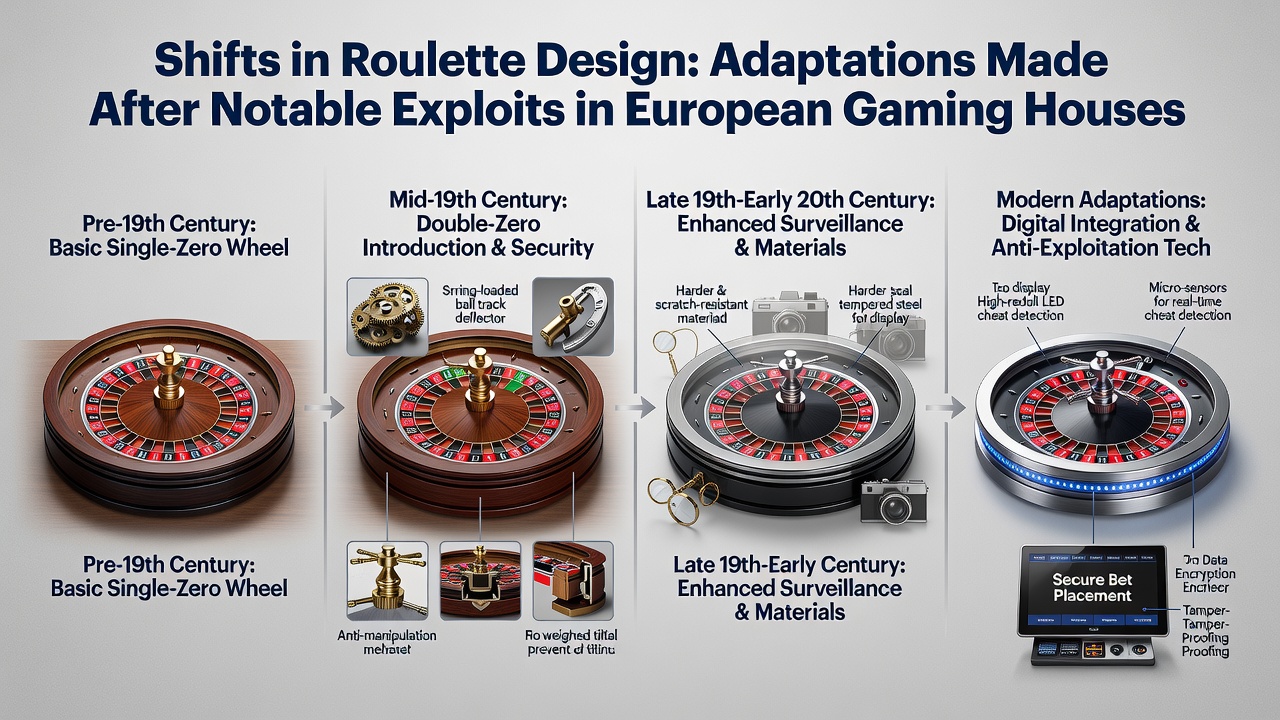
European gaming houses faced repeated challenges from wheel exploits throughout the nineteenth and twentieth centuries, and these incidents prompted measurable changes in roulette equipment and oversight procedures. Casino operators responded by altering wheel construction methods, introducing new materials, and implementing systematic monitoring protocols that addressed specific vulnerabilities identified through documented cases.
Early Exploits and Initial Responses
Biased wheels became a focal point for exploiters in several major European establishments during the late 1800s, when players identified physical imperfections that caused certain numbers to appear more frequently than probability suggested. Gaming houses in France and Germany documented instances where repeated measurements revealed slight imbalances in the wheelhead or frets, and they responded by commissioning redesigned wheels with tighter manufacturing tolerances and more durable materials that resisted wear over extended use.
One documented case involved a Monte Carlo wheel in the 1890s where sector betting strategies exploited minor defects, leading operators to adopt reinforced spindles and recalibration schedules that became standard across multiple properties. These adjustments reduced the window for mechanical advantage while maintaining the game's traditional pace and appearance.
Twentieth-Century Adaptations in Wheel Construction
By the mid-twentieth century European manufacturers introduced wheels featuring independent rotor assemblies and interchangeable components that allowed rapid replacement when bias checks indicated deviation. Data collected by casino engineering teams showed that routine inspection intervals shortened from monthly to weekly in many venues after several high-profile incidents in the 1960s and 1970s.
Aluminum and titanium alloys replaced earlier wooden and brass elements in some designs, providing greater resistance to warping and settling that previously created exploitable patterns. European regulatory bodies began requiring third-party certification of wheel balance before installation, a practice that spread from larger houses to smaller regional casinos by the 1980s.
Integration of Electronic Monitoring Systems
Electronic sensors appeared in European roulette wheels during the 1990s as operators sought to detect anomalies in real time rather than relying solely on post-session analysis. These systems recorded spin data across thousands of outcomes and flagged statistical outliers that manual observation often missed. Research conducted by the European Gaming and Betting Association indicated that properties adopting early sensor arrays experienced measurable declines in successful bias-based strategies.
By the early 2000s many houses combined these sensors with automated ball-speed trackers and rotor-velocity monitors, creating layered verification that continued to evolve through the 2010s. The approach allowed staff to intervene before patterns became actionable for players, while preserving the random outcome expected under standard rules.
Regulatory and Industry Standards Through 2026
European regulatory frameworks continued to tighten wheel specifications after incidents reported in the 2010s, with emphasis on tamper-evident seals and documented maintenance logs. A 2024 industry report compiled by the European Casino Association highlighted that over eighty percent of monitored wheels now undergo quarterly independent audits rather than annual reviews used in previous decades.
In July 2026 several major European operators participated in a joint technical symposium focused on next-generation wheel materials and sensor calibration methods, reflecting ongoing adaptation rather than a single endpoint. Figures from participating venues showed continued investment in precision engineering to address both mechanical and electronic vulnerabilities identified through prior exploits.
Conclusion
European gaming houses have adapted roulette equipment through incremental design changes and procedural refinements following documented exploits, resulting in wheels that incorporate stronger materials, tighter tolerances, and integrated monitoring technologies. These developments emerged directly from operational data collected across multiple decades and jurisdictions, creating a more resilient gaming environment while retaining the core mechanics of the game.