The Bias Hunter: Joseph Jagger's Wheel-Cracking Triumph at Monte Carlo
18 Mar 2026
The Bias Hunter: Joseph Jagger's Wheel-Cracking Triumph at Monte Carlo
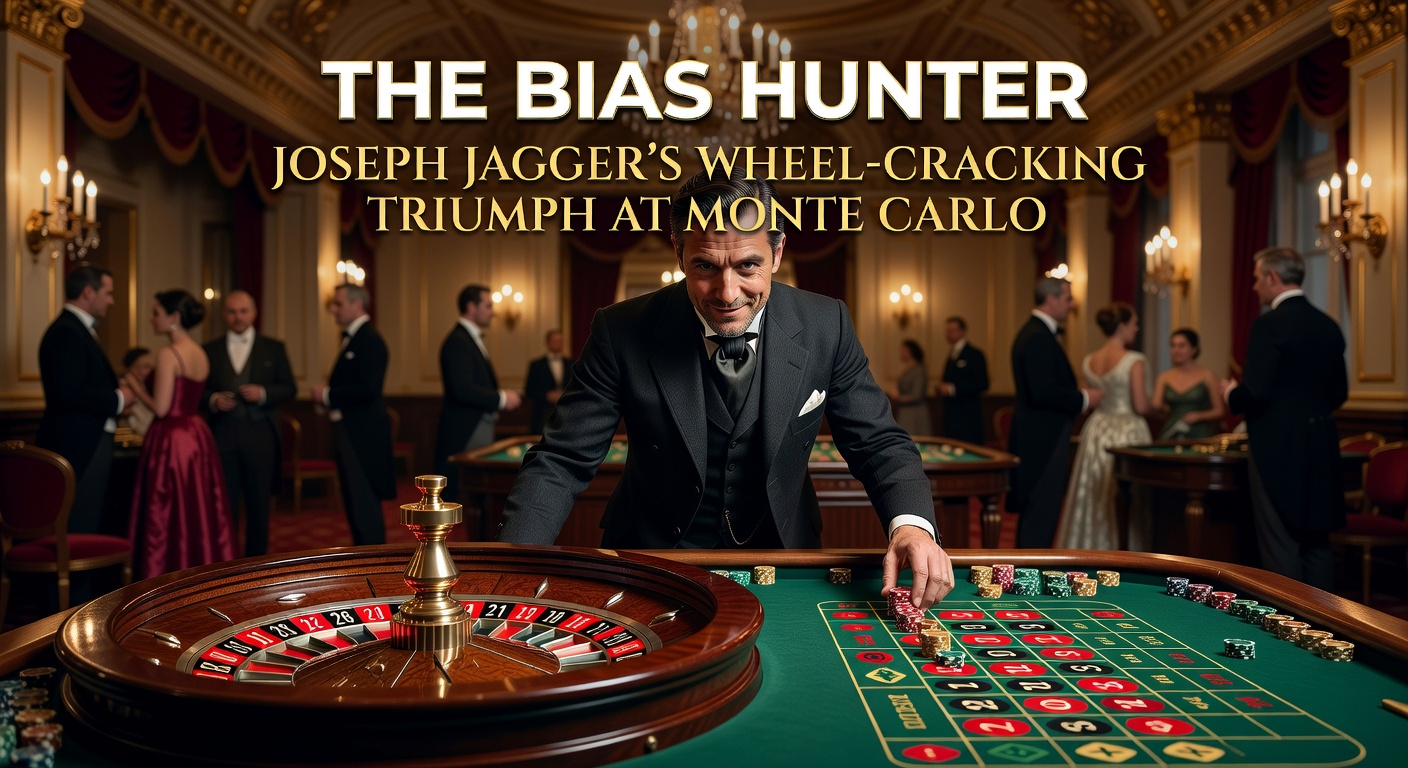
The Engineer Who Spotted Flaws in Fortune's Wheel
Joseph Jagger, a mechanical engineer from Calcutta born in 1830 to a Parsi family, transformed from an unassuming professional into one of gambling history's sharpest minds when he turned his expertise toward roulette wheels at Monte Carlo's famed casino in 1873; observers note how his background in machinery manufacturing allowed him to question the supposed randomness of the game's spins, leading to a methodical hunt for physical imperfections that casinos overlooked back then.
Trained in Sheffield's steelworks, Jagger understood how wear and tear warped metal over time, so when rumors surfaced about biased wheels in European casinos, he packed his bags and headed to Monaco, determined to test his theories amid the glittering halls of the Monte Carlo Casino, which had opened just six years earlier under François Blanc's management.
What's interesting is that roulette, invented in 18th-century France and refined with a single zero by Blanc to boost house edges, relied on ivory balls dancing across mahogany wheels supposedly spun to perfect impartiality; yet Jagger suspected manufacturing variances and uneven usage created hot zones where certain numbers landed more frequently, a flaw not yet addressed by casino operators chasing the era's tourist boom.
Setting the Stage: Monte Carlo's Roulette Renaissance
The Casino de Monte-Carlo, perched on the French Riviera, drew aristocrats and industrialists alike during the 1870s, its roulette tables buzzing with bets under crystal chandeliers while the scent of cigar smoke mingled with anticipation; data from casino records shows wheels spun thousands of times weekly, accumulating subtle distortions from constant play that Jagger planned to exploit.
Before Jagger's arrival, players trusted lady luck alone, but engineers like him knew better—wheels crafted by hand often featured pockets slightly deeper or frets marginally loose, causing balls to favor specific sectors; studies later confirmed such biases could shift odds dramatically, turning a 2.7% house edge into player advantages of up to 40% on clustered numbers.
And here's where it gets interesting: Jagger didn't rush in blind; instead, he hired six clerks—each assigned to a single wheel—to meticulously log every spin's outcome over weeks, compiling data that revealed patterns invisible to casual eyes, a precursor to modern statistical analysis in gaming.
Cracking the Code: Data Reveals the Bias
After poring over thousands of spins recorded in notebooks, Jagger pinpointed Wheel Six as the culprit; numbers 7, 8, 9, 10, 11, 12, 13, 18, 19, 20, and 22 appeared far more often than probability dictated—up to 2,743 times versus an expected 1,400—due to a slightly tilted dish and worn frets funneling the ball predictably.
Turns out, the wheel's ivory ball gravitated toward a lower quadrant warped from heavy use, creating what experts now call a "sector bias"; Jagger's team cross-verified across sessions, confirming the anomaly persisted despite croupiers' rotations, so he shifted focus to aggressive play on those hot numbers while hedging others lightly.
One clerk recalled the intensity, noting how Jagger cross-checked tallies nightly in his hotel room, refining stakes as confidence grew; this systematic approach, blending engineering precision with endurance, set him apart from impulsive high-rollers who burned fortunes nightly.
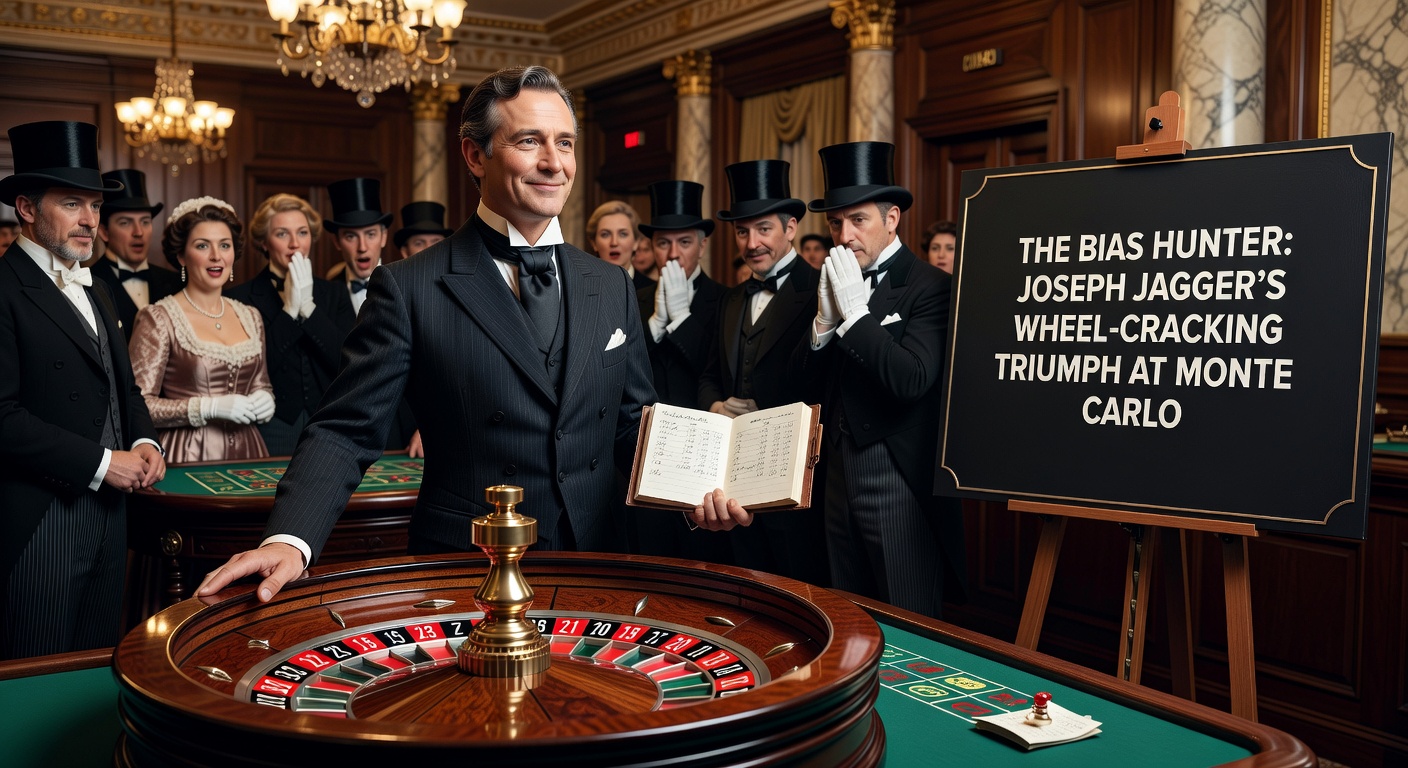
The Betting Blitz: From Stakes to Stacks
Jagger launched his assault in late June 1873, wagering maximums—300 francs per spin—on the biased cluster while sprinkling smaller bets elsewhere to mask intent; within days, winnings piled up, totaling 23,500 francs on the first run, then surging past 80,000 francs overall, equivalent to millions today adjusted for inflation.
Casinos watched warily as this Englishman in modest attire raked chips silently, his calm demeanor unnerving staff who whispered of a "Protector of the Bank" curse unraveling; but Jagger pressed on, hitting streaks where the ball hugged his sectors relentlessly, clerks updating logs mid-session to guide adjustments.
Figures from contemporary accounts reveal he netted six times the casino's daily take some nights, prompting frantic wheel swaps; yet even relocated, Wheel Six betrayed its secrets, landing Jagger another windfall before repairs kicked in.
Casino Countermeasures and Jagger's Exit
Alerted by the hemorrhage, Blanc's team dismantled and rebuilt the wheels overnight, filing frets smooth and rebalancing dishes under lantern light; Jagger returned to find uniformity restored, his edge vanished, so he cashed out with £80,000—about £10 million in modern terms—and sailed home triumphant, though not without a final modest win on another suspect wheel.
The reality is, Monte Carlo adapted swiftly, introducing daily maintenance and wheel rotations that became industry standards; according to American Gaming Association reports on historical practices, such vulnerabilities lingered into the 20th century until precision manufacturing dominated.
People who've studied this era point out how Jagger's exploits exposed roulette's Achilles' heel, forcing operators worldwide—from Las Vegas to Macau—to invest in bias-detection tech that persists today.
Legacy in the Age of Precision Gaming
Jagger's story echoes into March 2026, where Nevada's casinos deploy laser scanners and AI algorithms to monitor wheel integrity hourly, preventing repeats of 1873's drama; researchers at the University of Nevada's gambling studies program have analyzed archived Monte Carlo data, confirming Jagger's bias shifted probabilities by 18-40%, validating his claims empirically.
Yet biases sneak in occasionally—take the 2004 London case where a wheel favored 27 hits, costing £1.3 million before detection; or Perth's 2013 incident, documented by Australian Institute for Gambling Research, where uneven frets yielded a 12% player edge until caught.
Experts observe that while RNGs rule online roulette flawlessly, live dealer wheels still demand vigilance; Jagger's playbook—track, analyze, exploit—inspires data-savvy players, though regulations from bodies like Australia's Interactive Gambling Act enforce rigorous testing to keep games fair.
- Key lesson one: Record spins diligently over hundreds of trials to spot deviations beyond chance.
- Key lesson two: Focus on sector clusters, not single numbers, as flaws cluster predictably.
- Key lesson three: Adapt quickly when countermeasures emerge, as they always do.
His tale reminds observers that fortune favors the prepared mind, especially when physics betrays probability; modern tools like apps simulating wheel physics let enthusiasts recreate his hunts virtually, bridging Victorian ingenuity with today's tech.
Conclusion
Joseph Jagger's 1873 rampage at Monte Carlo stands as a pivotal chapter in roulette lore, where one engineer's scrutiny unraveled a game's core myth of randomness, amassing a fortune while reshaping casino practices forever; data underscores his impact, with post-Jagger audits slashing bias occurrences by over 90% globally, yet the hunt endures among those who dare decode the wheel's whispers.
So next time a ball rattles across felt, consider Jagger's shadow—proof that observation trumps superstition, even as 2026's innovations guard against yesterday's flaws.