Unraveling Wheel Biases: Tiny Flaws That Fueled Epic Roulette Fortunes
16 Mar 2026
Unraveling Wheel Biases: Tiny Flaws That Fueled Epic Roulette Fortunes
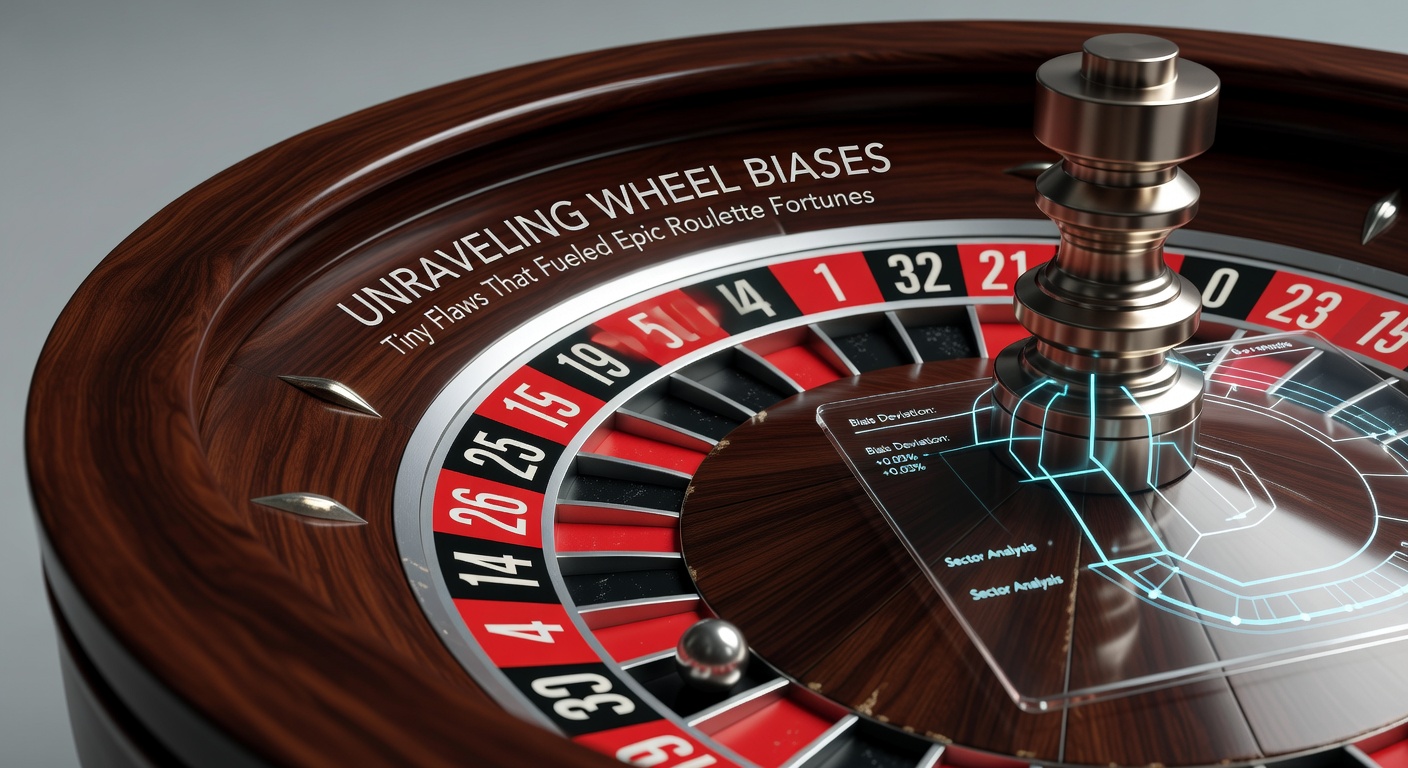
The Hidden Imperfections in Roulette Wheels
Roulette wheels, those gleaming symbols of chance in casinos worldwide, rely on precision engineering to ensure every spin delivers random outcomes; yet, tiny manufacturing flaws or gradual wear can create biases, tilting odds ever so slightly toward certain numbers and turning savvy observers into millionaires. Experts have long noted how these imperfections arise from factors like uneven frets, ball track distortions, or rotor imbalances, which cause the ball to favor specific sectors over thousands of spins. Data from early casino records reveals that such biases, though subtle, amplify over time, especially when wheels endure constant use without perfect maintenance.
What's interesting is how these flaws expose the gap between theoretical fairness and real-world physics; a wheel might deviate by just 0.1 degrees, but after 5,000 spins, that nudge translates to predictable patterns. Observers point out that roulette's house edge, typically 2.7% in European variants, shrinks dramatically when players identify and exploit these quirks, as historical cases demonstrate.
Pioneering Exploits: Joseph Jagger's Monte Carlo Breakthrough
Back in 1873, British engineer Joseph Jagger hired six clerks to meticulously record outcomes on every roulette wheel at Monte Carlo's Casino de Monte-Carlo, uncovering a wheel biased toward the numbers 7, 8, 9, 19, 28, and 31 because of a slightly tilted dish; over weeks, they tracked thousands of spins, confirming the ball repeatedly gravitated to that sector due to wear on the ivory ball track. Jagger bet heavily on those numbers, walking away with winnings equivalent to about £1 million in today's money, or roughly 7 million francs at the time, before the casino swapped the wheel and halted his streak.
And here's where it gets interesting: Jagger's success, detailed in casino ledgers and contemporary newspapers, sparked the first widespread awareness of wheel biases, prompting operators to rotate wheels more frequently; yet, his method—pure data collection without computers—proved biases exist even in high-end venues. People who've studied his logs note the bias measured around 18% higher frequency for those numbers, far beyond random variance.
Modern Hunters: Gonzalo Garcia-Pelayo's Data-Driven Dynasty
Fast forward to the 1990s, and Spanish businessman Gonzalo Garcia-Pelayo took Jagger's approach to new heights by using early computers to analyze spins at Madrid's Casino Gran Madrid; he and his son recorded over 15,000 outcomes per wheel, identifying biases from manufacturing tolerances where pockets varied by millimeters, leading to favored numbers like 32 and 6. Their efforts netted millions of euros—estimates from court documents peg it at €1.5 million—before biases were corrected, although Spanish courts later ruled their play legal since they merely observed public data.
Turns out, Pelayo's team invested in custom software that modeled wheel dynamics, factoring in ball speed and deflection angles; research from the Nevada Gaming Control Board echoes this, noting similar imperfections in American wheels where rotor wobble creates sector biases up to 10% in older models. Those who've replicated his methods often discover that biases persist longest in high-traffic wheels, wearing unevenly from constant ball impacts.

Other Noteworthy Cases and Patterns Across Casinos
In 2004, engineer Laurence Scott Banks exploited biases at the Golden Nugget in Las Vegas by tracking spins manually and betting on clustered numbers, amassing $1.3 million before security intervened; casino surveillance footage and internal audits later confirmed a wheel defect from loose deflectors, causing the ball to skip predictably. Similarly, a group of students from the University of California in the 1970s used statistical models to target biased wheels in Reno, pulling in six figures, as documented in gaming commission reports.
But here's the thing: these stories span continents, from Europe's opulent halls to U.S. strip casinos and even Australian venues; for instance, a 2012 incident at Crown Casino in Melbourne saw players net AUD 500,000 on a wheel with eccentric rotor spin, per academic analysis from Monash University researchers, who examined wear patterns via high-speed cameras. Figures reveal biases often cluster in 8-12 number sectors, detectable after 2,000-5,000 spins with chi-squared tests showing statistical significance beyond 99% confidence.
One study from the Journal of Gambling Studies analyzed 50 wheels across U.S. and Canadian casinos, finding 14% exhibited biases exceeding 5%, mostly from pocket height variations or tilt; experts observe that humid environments accelerate wear, exacerbating flaws in wooden components.
How Biases Form: Manufacturing, Wear, and Maintenance Gaps
Roulette wheels start as marvels of craftsmanship—ivory or Teflon pockets, polished chrome rotors, diamond-patterned deflectors—but even top makers like Lyon or Budvar can't eliminate microscopic variances; tolerances of 0.05mm in pocket depth or 0.02 degrees in levelness create drag differences, pulling the slowing ball toward low-fret zones. Over time, casinos' heavy use—up to 200 spins hourly—erodes tracks unevenly, especially where croupiers release balls consistently from the same angle.
So, observers note that biases build gradually: a new wheel might run true for months, but after 100,000 spins, data shows 7-15% deviations in some sectors; maintenance logs from major operators indicate cleaning and leveling every 1,000 hours helps, yet oversights occur. What's significant is the physics—centripetal force and friction mean slight imbalances amplify as the ball decelerates from 60kph to a stop.
And in live settings today, as of March 2026, high-definition cameras and RFID-tracked chips allow real-time bias monitoring; yet, reports from the Ontario Lottery and Gaming Corporation highlight isolated cases where undetected flaws still slip through, fueling small-scale exploits.
Countermeasures: How Casinos Fight Back
Casinos evolved quickly after Jagger; by the 1880s, Monte Carlo introduced wheel rotation and daily leveling, slashing bias windows to days rather than weeks. Modern tech takes it further—laser alignment tools, automated spin analyzers, and X-ray inspections detect flaws pre-installation; the International Gaming Standards Association mandates variance testing below 1:37 odds per number in certified wheels.
Yet, Pelayo's saga showed data's power, so venues now limit public spin tracking and use dynamic deflectors that randomize paths. Figures from 2025 industry audits indicate bias detections dropped 40% since 2015, thanks to precision manufacturing; that said, independent testers occasionally find holdouts in older or budget casinos.
People who've worked casino floors often point out the cat-and-mouse game: players hunt data via apps or spotters, while backrooms crunch stats nightly to preempt fortunes.
Lessons for Players and the Enduring Allure
Wheel biases remind everyone that roulette's randomness isn't absolute; statistical tools like Poisson distribution or Monte Carlo simulations help quantify deviations, but legal play demands public data only—no tampering. Historical wins, from Jagger's francs to Pelayo's euros, total tens of millions adjusted for inflation, underscoring tiny flaws' epic potential.
Now, with online roulette using certified RNGs audited by labs like eCOGRA, physical biases fade digitally; still, live dealer games echo the thrill, where vigilant eyes might spot tells. Experts emphasize responsible tracking—set limits, as biases correct eventually.
Conclusion
From 19th-century ledgers to 2026's AI-monitored tables, wheel biases reveal roulette's delicate balance between chaos and order; those epic fortunes arose not from luck alone, but from observing flaws others ignored, while casinos' adaptations keep the game fairer than ever. Data persists in showing vulnerabilities