25 Aug 2026
When Physics Meets Chance: Roulette Wheels Crafted for Precision and Fair Play
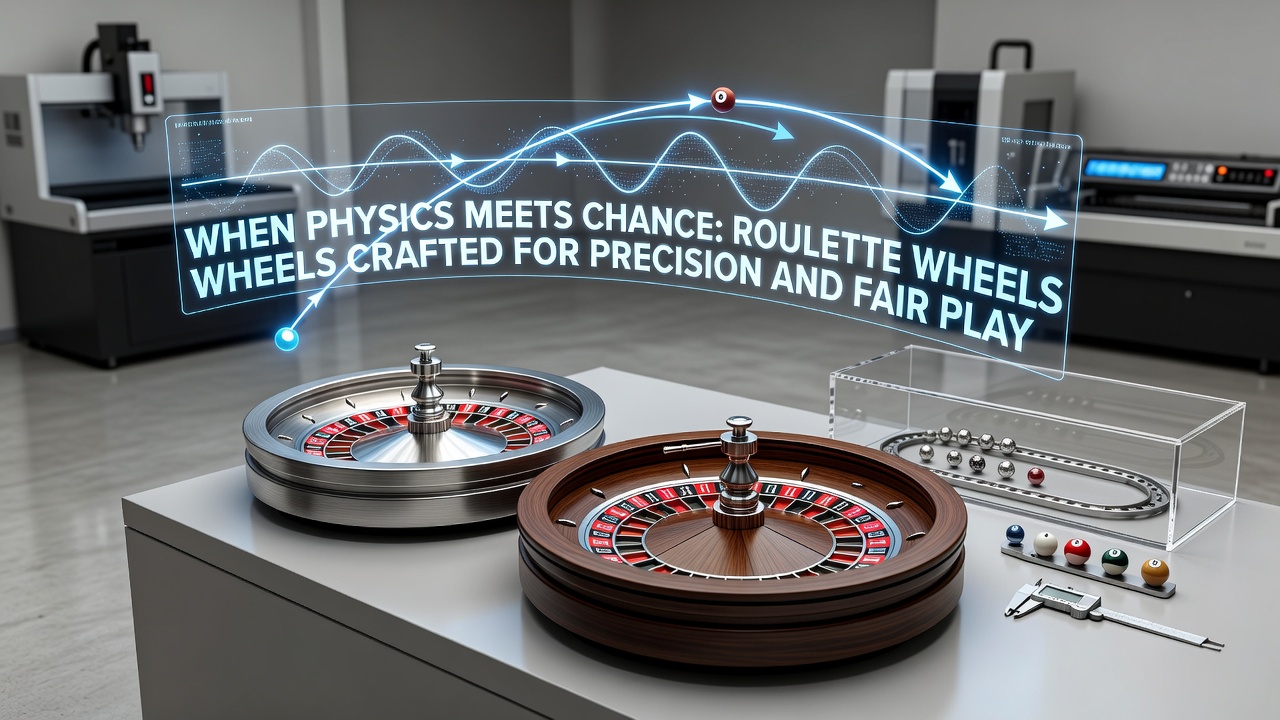 Roulette wheels represent a unique intersection where mechanical engineering meets the demands of random outcomes, and manufacturers dedicate significant resources to ensuring each component operates without bias. The wheel consists of a rotating disk divided into numbered pockets, a stationary bowl, and a small ball that travels along the track before settling into one of the compartments. Every element undergoes rigorous design processes because even minor imperfections can alter probabilities over repeated spins. Engineers select materials such as aircraft-grade aluminum for the rotor and high-density resins for the pockets to maintain structural integrity under continuous use. These choices reduce wear that might otherwise create uneven friction points. Ball bearings positioned at the base allow smooth rotation while calibrated weights distribute mass evenly across the assembly. Technicians perform static and dynamic balancing tests at multiple stages of production, measuring deviations down to fractions of a gram.
Manufacturing Standards and Quality Controls
Production facilities employ computer numerical control machines to cut pocket separators with tolerances measured in micrometers. This precision prevents any single compartment from gaining or losing advantage due to size variations. After machining, wheels receive multiple layers of protective coatings that preserve surface smoothness without introducing thickness inconsistencies. Quality teams then subject completed units to extended spin cycles under controlled conditions, recording outcomes with high-speed cameras and sensors that track ball velocity and landing patterns.
Independent laboratories verify these results through standardized protocols established by gaming authorities in various jurisdictions. Data collected during such evaluations shows that properly maintained wheels produce distributions consistent with theoretical probabilities when thousands of trials accumulate. Manufacturers document every adjustment and test result to provide traceability for regulatory audits.
Physics Principles Governing Wheel Performance
The ball's path depends on initial velocity, gravitational forces, and frictional interactions with the wheel track and rotor. Designers calculate the curvature of the ball track to create a consistent deceleration profile that randomizes results across the numbered layout. Pocket depth and sidewall angles further influence how the ball settles once it drops from the track, preventing it from bouncing out of one compartment and into another with predictable frequency.
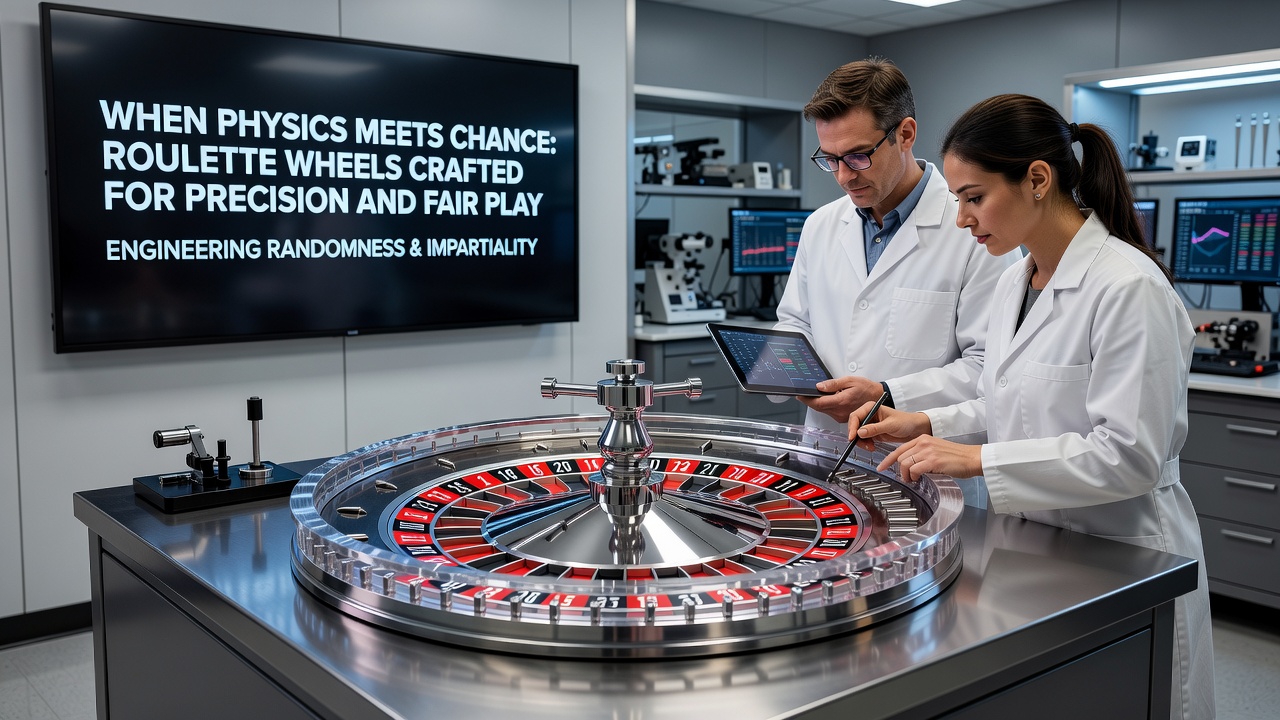 Observers note that temperature fluctuations and humidity levels can affect component expansion, so facilities maintain climate-controlled environments during both manufacturing and testing phases. Research conducted at institutions focused on applied mechanics has examined how these environmental variables interact with wheel geometry, leading to refined specifications that account for real-world casino conditions.
Regulatory Oversight Across Regions
Gaming equipment standards vary by location yet share common requirements for documented fairness testing. The Nevada Gaming Control Board maintains detailed equipment approval procedures that include physical inspection and statistical analysis of spin data. Similar frameworks operate in other major markets, requiring manufacturers to demonstrate that wheels meet predefined randomness thresholds before deployment in licensed venues. As of August 2026, several international suppliers continue to update their calibration equipment to align with evolving measurement technologies used by oversight bodies in North America and Europe.
Trade organizations such as the European Casino Association compile best practices for wheel maintenance that help operators preserve original performance characteristics over years of service. These guidelines emphasize regular inspections for bearing wear, rotor wobble, and pocket integrity because gradual changes can accumulate if left unaddressed.
Case Examples in Professional Settings
One major casino group in Australia implemented a wheel rotation schedule that alternates units between tables every few weeks, allowing each wheel to rest while others remain in active play. Records from this program indicate that such rotation extends service life while maintaining consistent outcome distributions. Another facility in Canada partnered with a university engineering department to develop sensor arrays that monitor wheel speed in real time, flagging any deviations that exceed normal operational ranges.
These approaches illustrate how continuous monitoring complements initial manufacturing precision. Technicians replace components according to scheduled intervals rather than waiting for visible defects, ensuring the physical properties that support fair play remain within specifications.
Conclusion
Roulette wheel construction relies on exacting physical standards that translate directly into reliable performance across countless spins. Through careful material selection, precision machining, and ongoing regulatory verification, manufacturers and operators work together to sustain the conditions necessary for chance to determine outcomes without mechanical interference. Ongoing refinements in testing methods and environmental controls continue to support these objectives as the industry evolves.